Introduction: Why This Decision Matters More Than Ever
Today, businesses operate in a hyper-competitive digital ecosystem. Customers expect fast, intuitive, and reliable mobile experiences. At the same time, companies must balance time-to-market, budget constraints, performance expectations, and future scalability.
Therefore, choosing between native and hybrid app development is not merely a technical decision — it is a strategic business investment.
Transition words such as therefore, moreover, however, and as a result play an important role here because each choice leads to very different outcomes over time.
What Is a Native App?
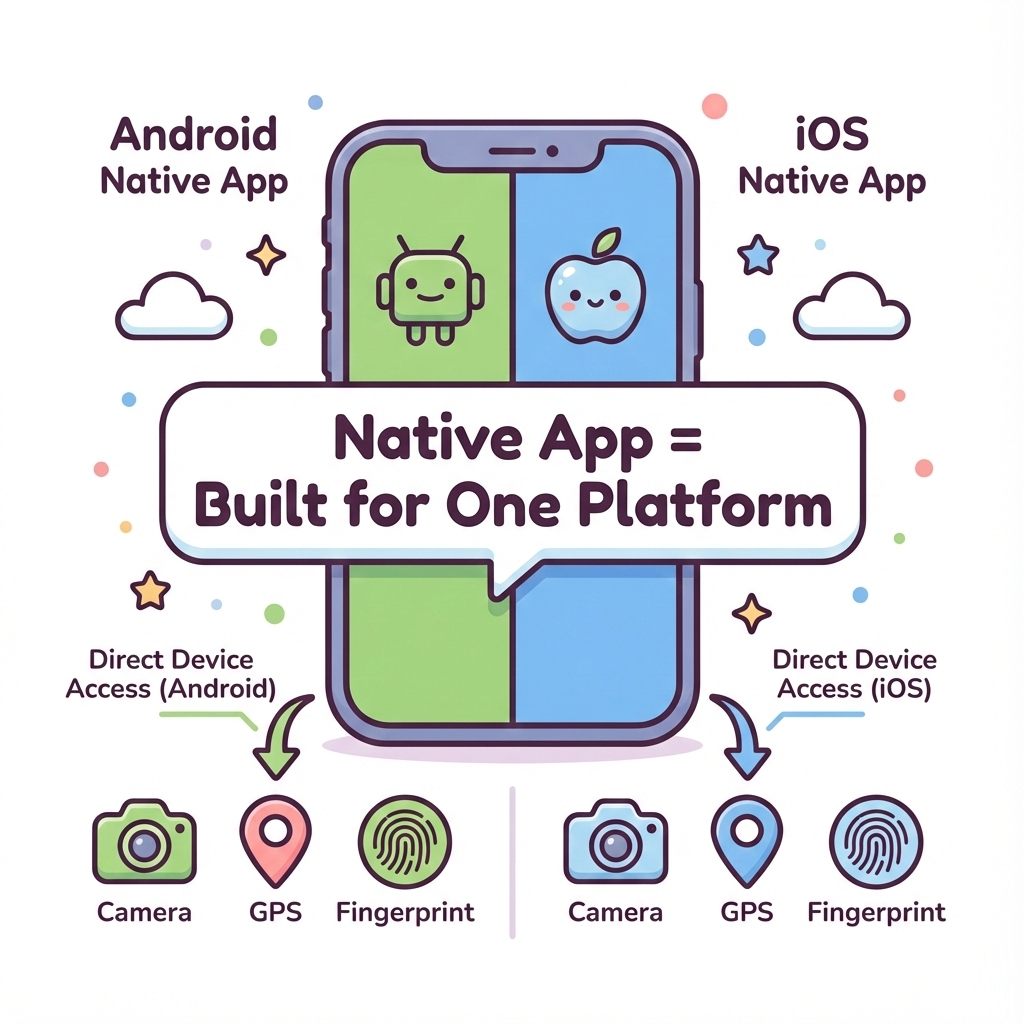
A native app is built specifically for a single operating system using platform-specific programming languages and tools.
Common Native Technologies
- Android: Kotlin, Java, Android Studio
- iOS: Swift, Objective-C, Xcode
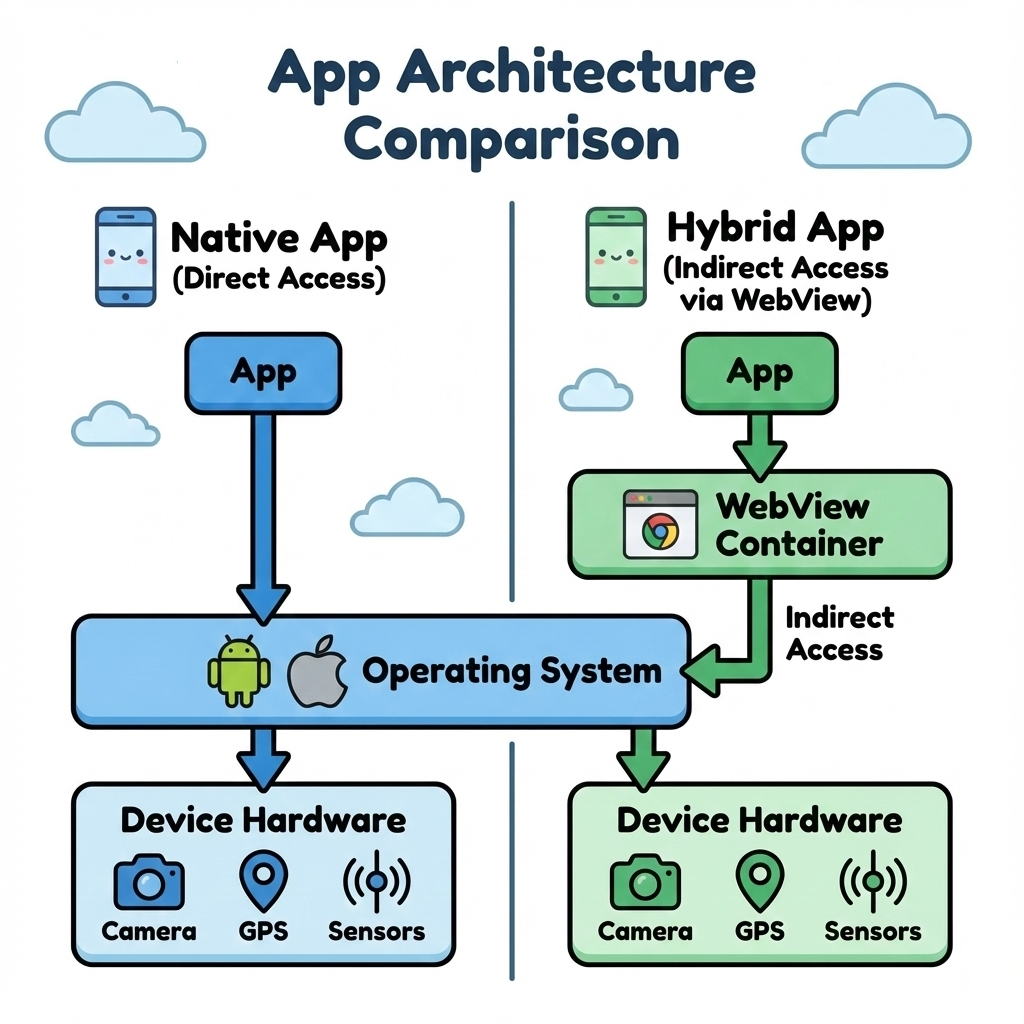
Because native apps are developed exclusively for one platform, they have direct access to device hardware and system APIs.
Key Characteristics of Native Apps
⚡ High performance and speed
🔐 Strong security architecture
🎯 Platform-specific UI/UX
📱 Full access to device features (camera, GPS, biometrics)
As a result, native apps deliver smooth animations, faster load times, and superior user experience.
What Is a Hybrid App?
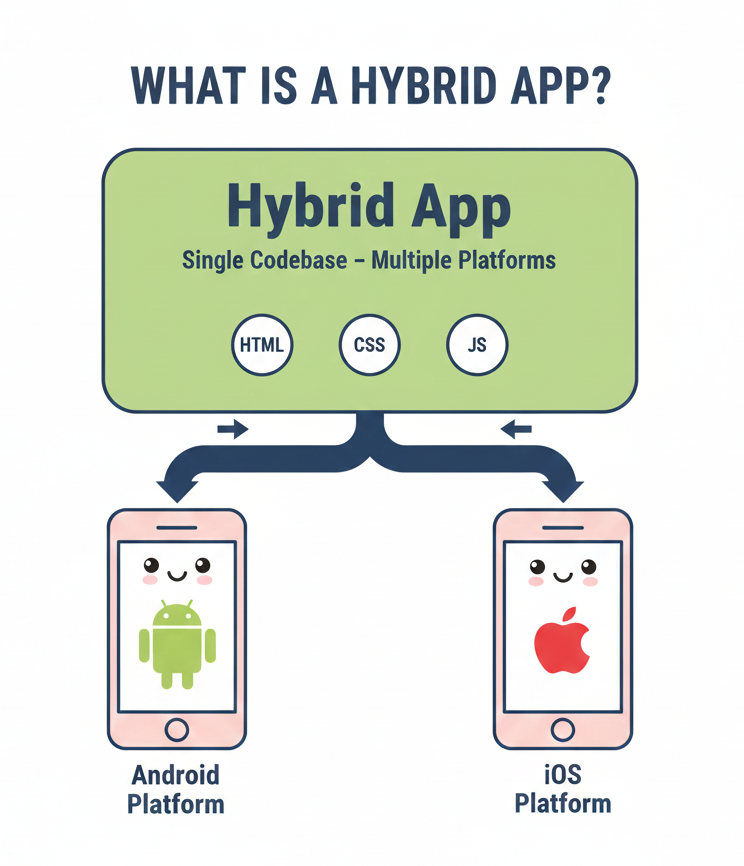
A hybrid app combines web technologies (HTML, CSS, JavaScript) with a native container, allowing a single codebase to run across multiple platforms.
Popular Hybrid Frameworks
- React Native
- Flutter
- Ionic
- Xamarin
Hybrid apps are deployed through app stores just like native apps, but internally they rely on cross-platform frameworks.
Key Characteristics of Hybrid Apps
🔁 Single codebase for Android & iOS
💰 Lower development cost
⏱ Faster time-to-market
🔧 Easier maintenance
However, hybrid apps may rely on plugins to access advanced device features, which can affect performance in complex applications.
Native vs Hybrid Apps: Core Differences Explained
Performance & Speed
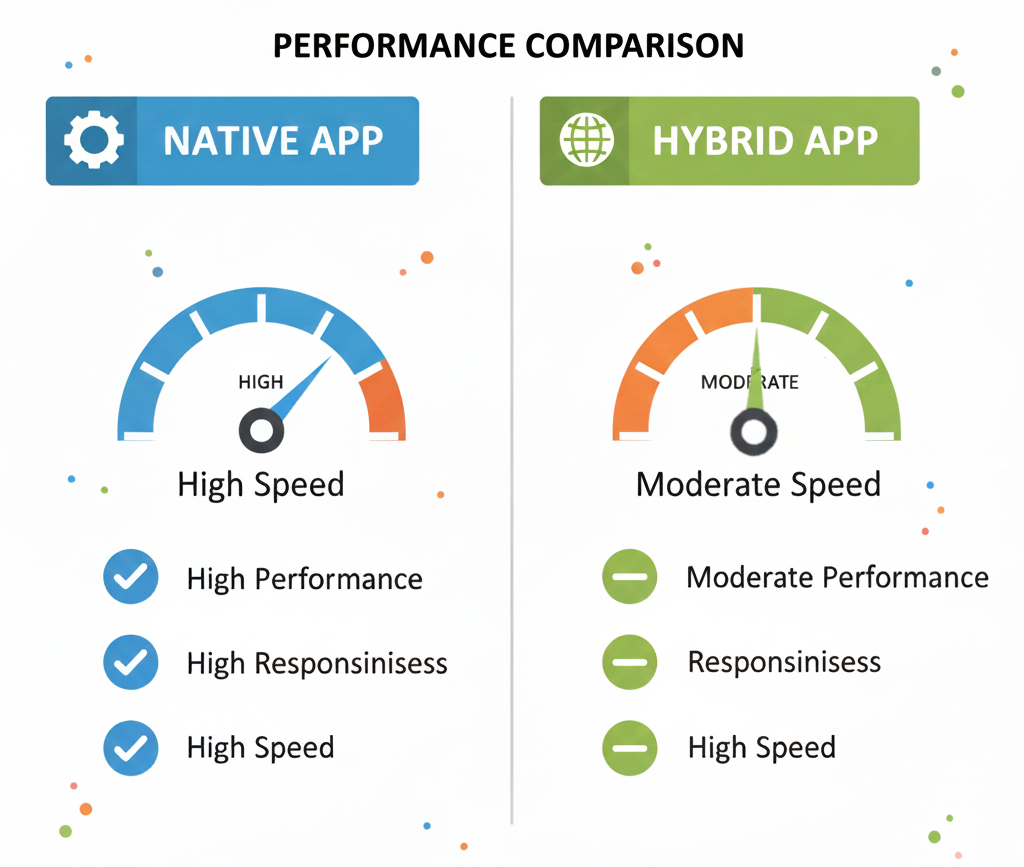
Native apps are compiled directly into machine code, making them exceptionally fast and responsive. Hybrid apps, while optimized, still introduce a performance layer.
Verdict: Native apps win for performance-critical use cases.
User Experience (UX/UI)
Native apps follow platform-specific design guidelines, resulting in a more natural and intuitive feel. Hybrid apps aim for consistency across platforms but may feel less “native.”
Verdict: Native apps provide superior UX for brand-sensitive businesses.
Development Cost
Hybrid apps significantly reduce development and maintenance costs by using a single codebase. Native apps require separate teams and parallel development.
Verdict: Hybrid apps are more cost-effective for startups and MVPs.
Time to Market
Because hybrid apps reuse code, they can be launched much faster. Native apps take longer due to platform-specific builds.
Verdict: Hybrid apps accelerate market entry.
Scalability & Long-Term Growth
Native apps scale more efficiently for complex features, heavy traffic, and long-term evolution. Hybrid apps may require refactoring at scale.
Verdict: Native apps are ideal for enterprise-scale growth.
Security Considerations
Native apps offer deeper OS-level security integration. Hybrid apps rely on third-party plugins, increasing attack surfaces.
Verdict: Native apps provide stronger security for sensitive data.
Business Use Cases: Which App Type Fits Which Business?
When Businesses Should Choose Native Apps
🏦 FinTech & Banking applications
🛒 Large-scale eCommerce platforms
🎮 High-performance gaming apps
🏥 Healthcare & compliance-heavy apps
In these cases, performance, security, and reliability are non-negotiable.
When Businesses Should Choose Hybrid Apps
🚀 Startups & MVP launches
📢 Marketing & promotional apps
🧩 Internal enterprise tools
🌍 Content-driven platforms
Hybrid apps allow businesses to validate ideas quickly while controlling costs.
Cost Comparison: Native vs Hybrid Apps
| Factor | Native Apps | Hybrid Apps |
|---|---|---|
| Initial Development | High | Low |
| Maintenance | High | Moderate |
| Performance ROI | High | Medium |
| Scalability | Excellent | Good |
Therefore, businesses must consider long-term ROI rather than upfront cost alone.
Native vs Hybrid: Decision Framework for Businesses
Ask yourself:
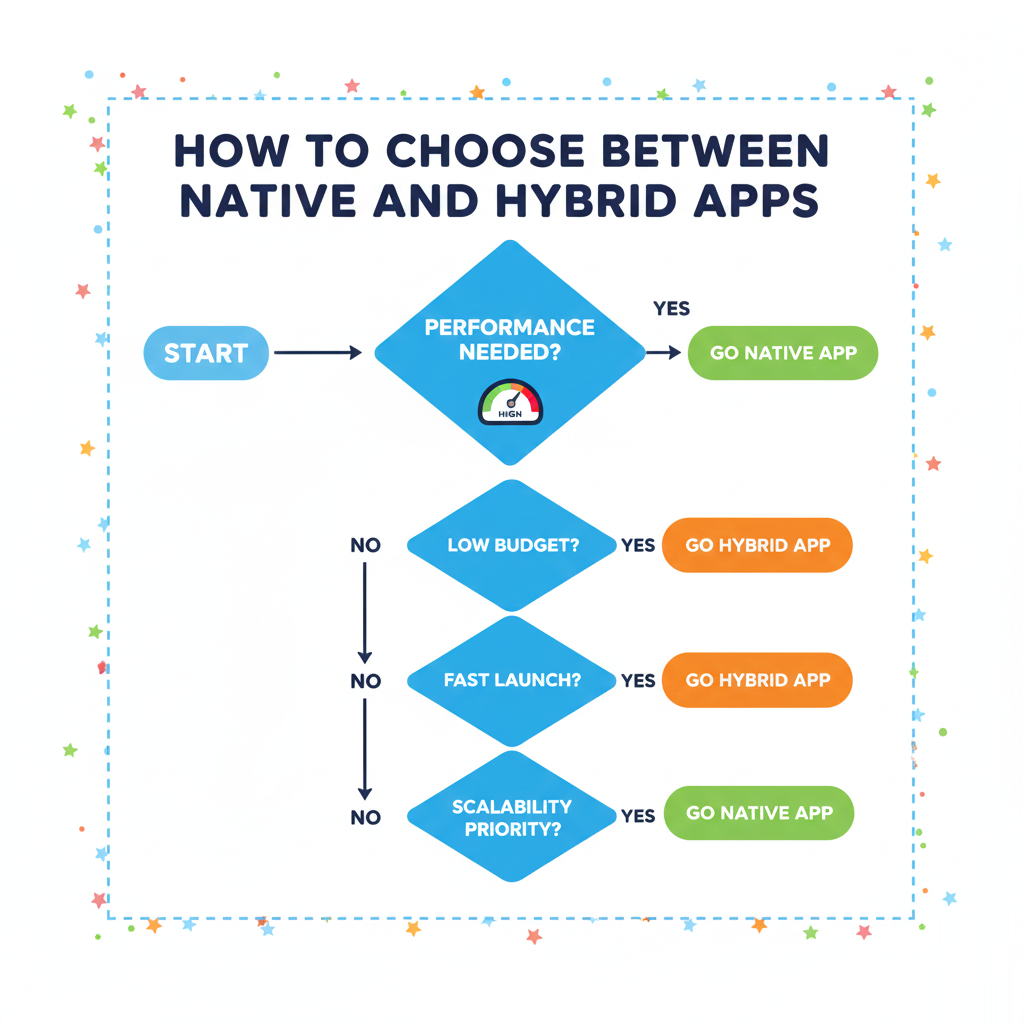
- Do you need high performance or advanced animations?
- Is your app security-critical?
- What is your expected user scale in 2–5 years?
- Is speed-to-market more important than perfection?
If performance and scalability dominate — go native.
If speed and cost-efficiency matter most — go hybrid.
Role of Professional Development Partners
Choosing the right architecture is only half the battle. Execution matters equally.
At Technobot System Pvt. Ltd., businesses receive expert consultation to choose between native and hybrid architectures based on business goals, user behavior, and scalability plans.
👉 Also explore: https://technobotsystem.com/blog
Future Trends: Native & Hybrid in 2025 and Beyond
- Hybrid frameworks like Flutter are narrowing performance gaps
- Native development remains dominant for mission-critical apps
- AI-driven optimization tools are improving cross-platform UX
As a result, hybrid apps will dominate early-stage innovation, while native apps will power large-scale digital ecosystems.
Final Verdict: Which One Should Businesses Choose?
There is no one-size-fits-all answer.
- Native apps offer unmatched performance, security, and scalability.
- Hybrid apps deliver speed, affordability, and flexibility.
The best approach is aligning technology with business vision, not trends.
Conclusion
In conclusion, Native vs Hybrid Apps is not a debate of better or worse — it is a decision of fit and foresight. Businesses that align their app strategy with long-term goals, user expectations, and technical realities are the ones that dominate digital markets.
📌 If your goal is Google Page 1 visibility, high user engagement, and sustainable growth — this decision deserves careful planning.