Why Super Apps Are Transforming Digital Platforms
🚀 “The future of digital platforms is not more apps — it’s fewer, smarter, unified ecosystems.”
In today’s fast-moving digital world, users are overwhelmed by dozens of apps on their smartphones. However, a new evolution is reshaping the mobile landscape — Super Apps.
But what exactly are super apps? More importantly, why is everyone — from startups to global tech giants — talking about them?
In this in-depth guide, we will explore:
- What super apps are
- How they work
- Real-world examples
- Why businesses are investing heavily in them
- How AI and automation are powering them
- Whether your business should build one
Moreover, this blog is structured to help you understand both the technical and strategic aspects of super apps while staying fully optimized for SEO and Google Search Console performance.
What Are Super Apps and How Do They Work?
A Super App is a single mobile application that integrates multiple services into one unified platform. Instead of downloading separate apps for payments, shopping, messaging, bookings, or financial services, users access everything within one ecosystem.
In simple terms:
📱 A super app = Messaging + Payments + Shopping + Services + More — All in One.
Unlike traditional apps that focus on a single function, super apps create a digital ecosystem where third-party services and mini-programs operate within the main application.
Core Features of Modern Super Apps
1️⃣ Multi-Service Architecture
Super apps combine diverse functionalities such as:
- Digital payments
- E-commerce
- Ride-hailing
- Food delivery
- Banking
- Insurance
- Investments
- Messaging
2️⃣ Mini-App Ecosystem
Instead of installing separate apps, users access mini-programs inside the super app.
3️⃣ Seamless User Experience
Because everything operates under one interface, transitions between services are smooth and frictionless.
4️⃣ Data Intelligence Integration
Super apps leverage AI and machine learning to personalize recommendations and optimize user journeys.
Leading Examples of Successful Super Apps
WeChat (China)
Perhaps the most successful super app globally. It combines:
- Messaging
- Social media
- Digital wallet
- Business tools
- Government services
Grab (Southeast Asia)
Started as ride-hailing, later expanded into:
- Food delivery
- Financial services
- Insurance
- Payments
Paytm (India)
A fintech-driven super app offering:
- UPI payments
- Bill payments
- Travel bookings
- Investments
- E-commerce
💡 Why Super Apps Are Gaining Global Popularity
There are several reasons driving this trend.
1. User Convenience
Firstly, users prefer fewer apps with broader functionality. Therefore, super apps reduce app clutter.
2. Increased User Retention
Because users perform multiple tasks within one ecosystem, engagement increases significantly.
3. Revenue Diversification
Businesses generate revenue from various verticals within a single platform.
4. Stronger Data Insights
Since all services operate inside one ecosystem, data collection becomes centralized and more actionable.
The Role of AI and Automation in Super Apps
Super apps are not just multi-service platforms — they are AI-powered ecosystems.
AI enhances super apps by:
- Personalizing user recommendations
- Detecting fraud in fintech modules
- Predicting customer behavior
- Optimizing pricing models
- Automating customer support via chatbots
As discussed in our blog on How AI and ML Are Transforming Modern Business Operations, AI-driven decision-making is redefining digital platforms.
Technical Architecture Behind Super Apps
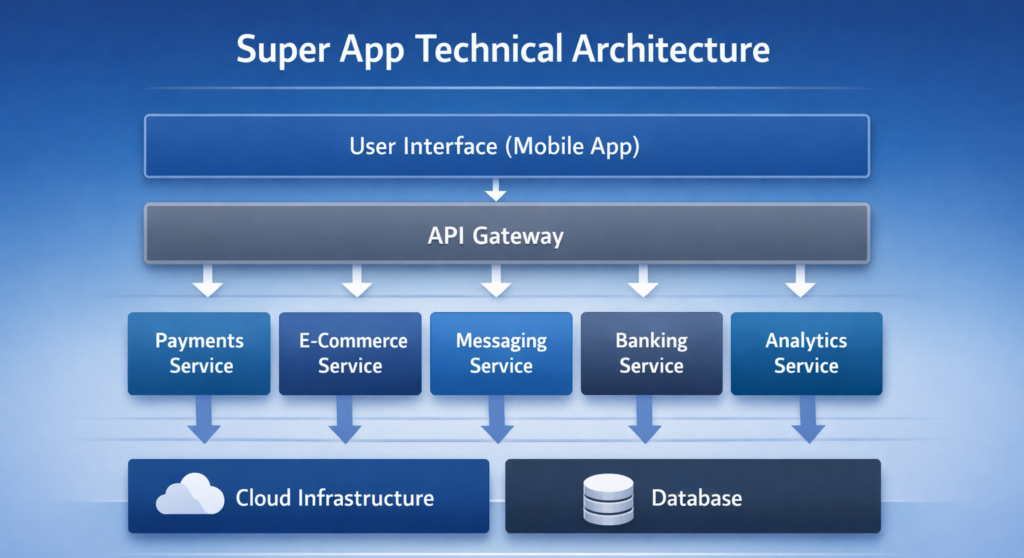
Super app development requires advanced architecture.
Microservices Architecture
Each service operates independently but connects via APIs.
Cloud Infrastructure
Scalability is critical. Therefore, most super apps use cloud-native environments.
API-First Design
Third-party integrations are essential for ecosystem growth.
Strong Cybersecurity Framework
Given the financial and personal data involved, security is non-negotiable.
You can also explore our insights on Why Investing in IT Infrastructure Is No Longer Optional for deeper understanding.
Business Benefits of Super Apps
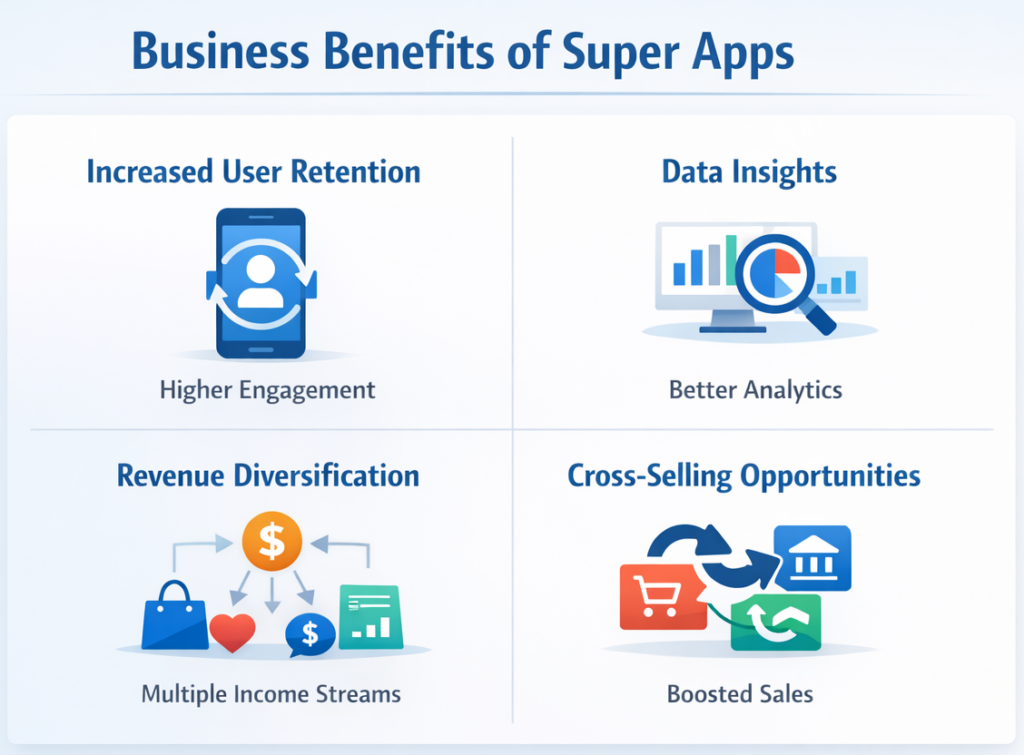
Increased Customer Lifetime Value
Because users interact across services, retention improves.
Data Monetization Opportunities
Aggregated data helps in strategic decision-making.
Platform Expansion Model
Third-party developers can launch mini-apps within your ecosystem.
Cross-Selling and Upselling
Payments users can be converted into investment customers.
⚠️ Major Challenges in Developing Super Apps
Although the opportunities are massive, challenges exist.
Security Risks
Multiple services increase vulnerability exposure.
Complex Architecture
Development costs and management complexity are high.
Regulatory Compliance
Especially in fintech, compliance laws vary by region.
The Future of Super Apps in 2026 and Beyond
Super apps are expected to evolve in three major directions:
- AI-Driven Predictive Ecosystems: Apps will predict user needs before requests.
- Web3 & Blockchain Integration: Decentralized identity and payments may integrate.
- Enterprise Super Apps: Companies may develop internal super apps for HR, payroll, and operations.
As automation continues to grow, platforms combining services under one digital roof will dominate markets.
Should Your Business Build a Super App?
Before building one, ask:
- Do you have an existing user base?
- Can you scale infrastructure?
- Do you have strong cybersecurity readiness?
- Is your market ready for multi-service integration?
If yes, then building a super app could position your business as a digital ecosystem leader.
Conclusion
Super apps represent the next evolution of digital platforms. Instead of competing as isolated applications, forward-thinking businesses are building integrated digital ecosystems that combine payments, commerce, communication, and AI-driven services into one seamless experience. Moreover, with advancements in artificial intelligence, scalable cloud infrastructure, and microservices architecture, these platforms are no longer just a passing trend — they are becoming a long-term digital transformation strategy.
💬 “The companies that control ecosystems will control digital economies.”
Therefore, organizations that adopt ecosystem-driven innovation early will not only enhance customer engagement but also unlock new revenue streams and long-term scalability. If your business is planning to develop scalable, AI-powered digital solutions, you can explore enterprise technology insights and development expertise at Technobot System Pvt. Ltd.