Cloud computing has transformed the way businesses build, deploy, and scale digital solutions. From startups to enterprises, organizations now rely on cloud infrastructure to run applications, manage data, and support remote operations. However, as cloud environments grow, infrastructure expenses can quickly spiral out of control without proper management.
This is where cloud cost optimization becomes critical. Businesses today are not only looking for scalable infrastructure but also searching for smarter ways to reduce unnecessary spending while maintaining performance, security, and reliability.
Whether you are running enterprise applications, SaaS platforms, custom web applications, or cloud-native services, optimizing cloud expenses can significantly improve operational efficiency and business profitability. Many organizations working with modern development partners such as Technobot System are now integrating cloud optimization strategies during application development itself to avoid long-term infrastructure waste.
In this blog, we will explore practical cloud cost optimization strategies, industry best practices, common mistakes, and proven methods businesses can use to save on infrastructure without sacrificing performance.
Understanding Cloud Cost Optimization
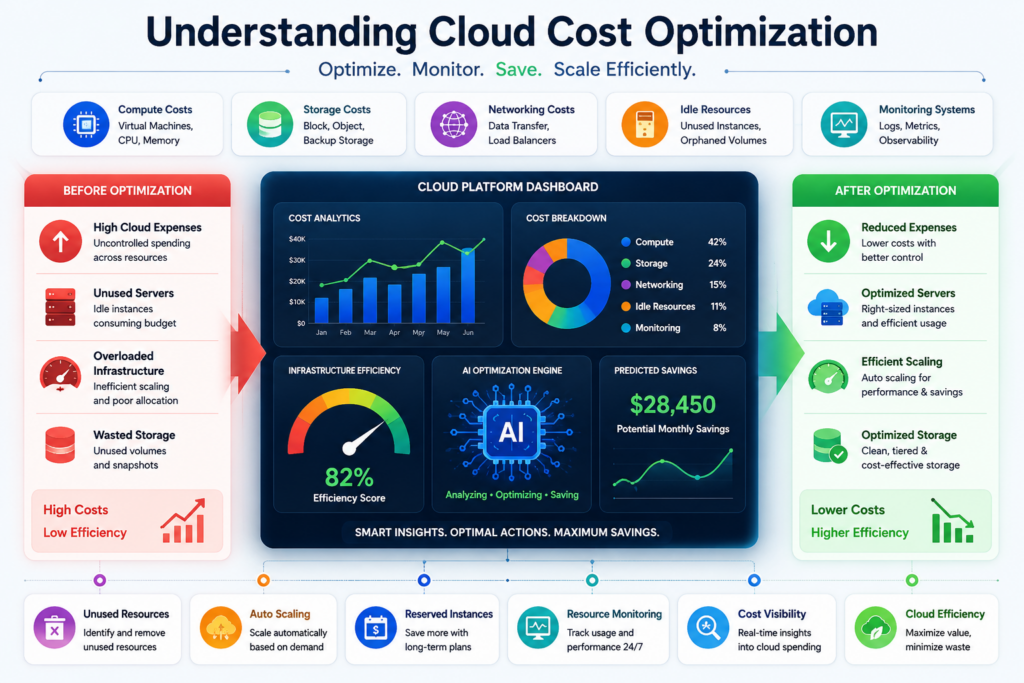
Cloud cost optimization is the process of reducing overall cloud spending while maximizing resource efficiency and maintaining required performance levels.
It involves:
- Monitoring cloud usage
- Eliminating unused resources
- Scaling infrastructure efficiently
- Choosing the right pricing models
- Automating infrastructure management
- Improving architectural efficiency
Cloud providers offer flexible pricing, but flexibility can also create complexity. Without proper governance, businesses often pay for idle servers, oversized instances, unnecessary storage, or poorly optimized workloads.
According to the AWS Cost Optimization Framework, organizations can reduce cloud costs significantly by continuously monitoring workloads and aligning resources with actual business needs.
Why Cloud Costs Increase So Quickly
Many organizations move to the cloud expecting lower operational expenses. However, cloud bills often rise unexpectedly because of poor visibility and uncontrolled resource provisioning.
Common Reasons for High Cloud Costs
1. Overprovisioned Resources
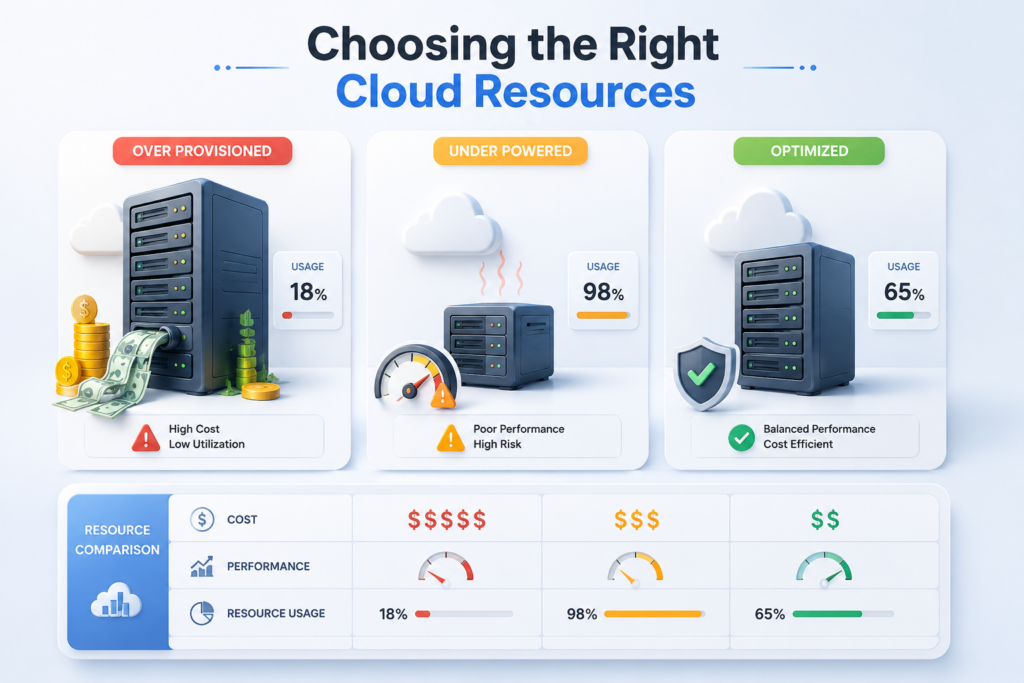
Many teams allocate larger compute instances than necessary to avoid performance issues. Over time, these oversized resources remain underutilized while continuously generating costs.
2. Idle Infrastructure
Unused virtual machines, unattached storage volumes, inactive databases, and forgotten testing environments contribute heavily to wasted cloud spending.
3. Lack of Auto Scaling
Without dynamic scaling, businesses continue paying for peak-level infrastructure even during low traffic periods.
4. Multi-Cloud Complexity
Organizations using multiple cloud providers often struggle with cost visibility and centralized governance.
5. Poor Monitoring
Without real-time monitoring and analytics, businesses cannot identify where infrastructure spending is increasing unnecessarily.
Benefits of Cloud Cost Optimization
Implementing a strong cloud cost optimization strategy provides multiple operational and financial advantages.
Reduced Infrastructure Expenses
The most obvious benefit is lower monthly cloud spending. Businesses can reduce unnecessary costs while maintaining application performance.
Improved Resource Utilization
Optimization ensures every resource is actively contributing to business operations.
Better Scalability
Efficient infrastructure design allows businesses to scale applications without massive cost increases.
Enhanced Operational Visibility
Cloud monitoring tools provide better insights into application behavior and resource consumption.
Increased ROI
Organizations gain better returns from their cloud investments through efficient infrastructure planning.
Cloud Cost Optimization Strategies Businesses Should Implement
1. Right-Size Your Cloud Resources
Right-sizing means selecting infrastructure resources that match actual workload requirements.
Many businesses use high-performance instances even when applications require moderate compute power. Monitoring CPU, memory, and storage utilization helps identify opportunities to downgrade resources safely.
Best Practices for Right-Sizing
- Analyze workload patterns regularly
- Reduce oversized virtual machines
- Use performance monitoring dashboards
- Schedule periodic infrastructure reviews
- Remove unnecessary high-capacity instances
Cloud providers like Microsoft Azure and AWS offer built-in tools for resource recommendations and optimization.
2. Implement Auto Scaling
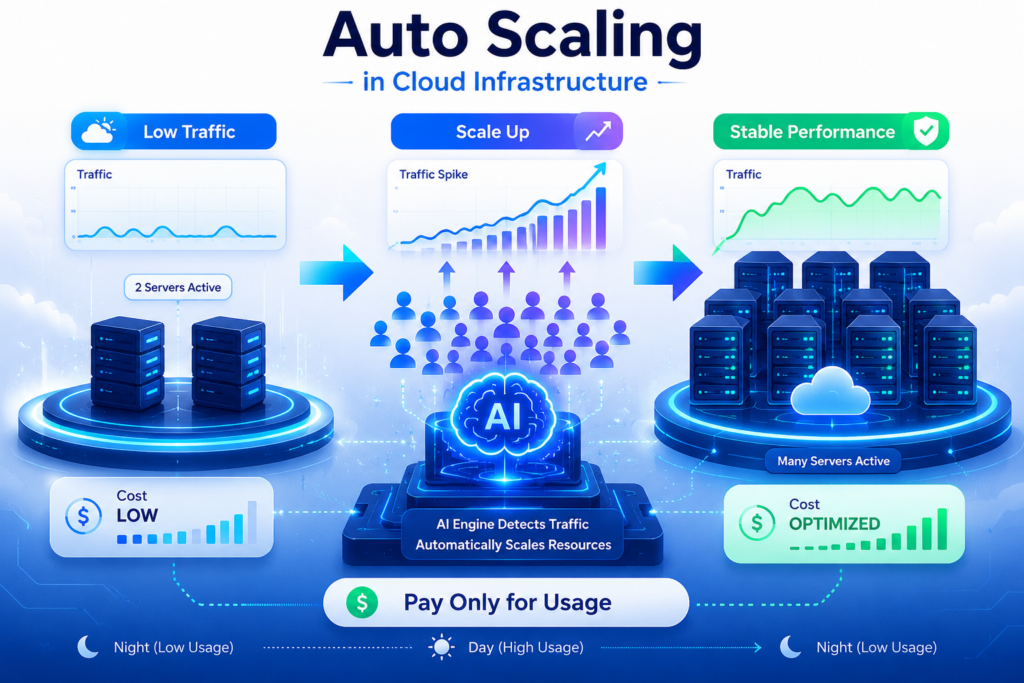
Auto scaling automatically adjusts infrastructure capacity based on traffic or workload demand.
Instead of paying for maximum infrastructure all the time, businesses can scale resources up during peak traffic and reduce them during low usage periods.
Advantages of Auto Scaling
- Lower infrastructure costs
- Better application performance
- Improved resource efficiency
- Reduced manual management
For businesses building scalable digital platforms, integrating auto scaling during application architecture planning is essential. Teams offering custom cloud application development services often implement these strategies during deployment planning to ensure long-term infrastructure efficiency.
3. Use Reserved Instances and Savings Plans
Cloud providers offer discounted pricing models for long-term infrastructure commitments.
Common Pricing Options
| Pricing Model | Best Use Case |
|---|---|
| On-Demand | Short-term unpredictable workloads |
| Reserved Instances | Stable long-term workloads |
| Spot Instances | Flexible non-critical workloads |
| Savings Plans | Consistent compute usage |
Reserved instances can significantly reduce cloud spending compared to standard on-demand pricing.
According to the Google Cloud pricing optimization documentation, businesses can achieve substantial savings by aligning workloads with long-term pricing models.
4. Eliminate Idle and Unused Resources
One of the easiest ways to achieve cloud cost optimization is identifying unused infrastructure.
Resources Commonly Left Running
- Inactive virtual machines
- Old snapshots
- Unused storage buckets
- Test environments
- Orphaned IP addresses
- Unused databases
Optimization Tips
- Schedule automated shutdowns
- Delete unused resources regularly
- Use infrastructure cleanup scripts
- Monitor dormant services
Regular cloud audits can uncover significant hidden waste across infrastructure environments.
5. Optimize Cloud Storage Costs
Storage expenses grow rapidly as businesses generate more application data, backups, media assets, and logs.
Storage Optimization Techniques
Use Tiered Storage
Move rarely accessed files into cheaper archival storage.
Compress Data
Compression reduces storage space requirements significantly.
Apply Retention Policies
Delete outdated logs and temporary files automatically.
Remove Duplicate Data
Data deduplication helps reduce unnecessary storage usage.
Modern businesses handling large-scale applications often integrate storage optimization strategies alongside backend architecture improvements and automation planning. Many cloud-focused development teams also publish educational resources on scalable infrastructure management through their technology blogs.
Monitoring and Visibility: The Foundation of Cloud Cost Optimization
You cannot optimize what you cannot measure.
Cloud monitoring tools provide visibility into:
- Resource utilization
- Application performance
- Spending trends
- Idle infrastructure
- Traffic behavior
- Cost anomalies
Popular Cloud Monitoring Tools
AWS Cost Explorer
Provides cost analysis and usage tracking for AWS environments.
Azure Cost Management
Helps organizations monitor Azure infrastructure expenses.
Google Cloud Billing Reports
Offers detailed billing insights and optimization recommendations.
Third-Party Monitoring Platforms
Tools like Datadog, New Relic, and CloudHealth provide centralized visibility across multi-cloud environments.
Containerization and Kubernetes Optimization
Containerized applications improve resource efficiency compared to traditional virtual machines.
However, Kubernetes environments can also become expensive without proper optimization.
Kubernetes Cost Optimization Strategies
Rightsize Pods and Containers
Allocate only required CPU and memory resources.
Use Cluster Auto Scaling
Automatically scale nodes based on workload demand.
Monitor Namespace Usage
Track resource allocation across development teams.
Remove Idle Clusters
Unused clusters generate unnecessary infrastructure costs.
As containerized architectures continue to grow, organizations are increasingly investing in efficient DevOps practices and automation frameworks to control cloud expenses.
Serverless Computing for Cost Efficiency
Serverless computing allows businesses to pay only for actual execution time instead of continuously running infrastructure.
Benefits of Serverless Architecture
- No idle server costs
- Automatic scaling
- Reduced infrastructure management
- Faster deployment cycles
Popular Serverless Platforms
- AWS Lambda
- Azure Functions
- Google Cloud Functions
Serverless architecture works particularly well for:
- APIs
- Background jobs
- Event-driven systems
- Automation workflows
However, serverless may not be ideal for every workload. Businesses should evaluate performance patterns before migration.
Implement Governance and Budget Controls
Without governance, cloud environments often become chaotic and expensive.
Important Governance Practices
Set Budget Alerts
Configure alerts when spending exceeds predefined thresholds.
Apply Resource Tagging
Tag infrastructure resources based on teams, projects, or environments.
Define Usage Policies
Restrict unnecessary resource creation.
Create Cost Ownership
Assign departments responsibility for cloud spending.
Cloud governance creates accountability while improving financial transparency across teams.
DevOps and Automation in Cloud Cost Optimization
Automation plays a major role in reducing cloud waste.
Infrastructure Automation Benefits
- Faster deployments
- Reduced manual errors
- Consistent resource provisioning
- Improved scalability
- Better infrastructure efficiency
Examples of Automation
- Auto shutdown scripts
- Infrastructure as Code (IaC)
- CI/CD optimization
- Automated scaling policies
- Resource cleanup workflows
DevOps practices combined with infrastructure automation help businesses maintain agile and cost-efficient cloud environments.
Multi-Cloud and Hybrid Cloud Optimization
Many organizations use multiple cloud providers to avoid vendor lock-in or improve redundancy.
However, multi-cloud environments can increase operational complexity.
Challenges in Multi-Cloud Cost Management
- Fragmented billing systems
- Lack of centralized monitoring
- Duplicate resources
- Inconsistent governance policies
Optimization Strategies
- Use centralized monitoring tools
- Standardize governance policies
- Consolidate workloads strategically
- Monitor cross-cloud data transfer costs
Businesses planning enterprise-scale digital transformation projects often benefit from consulting teams experienced in cloud-native architecture, scalable backend development, and infrastructure modernization.
Security and Compliance Considerations
Cost optimization should never compromise security.
Organizations must maintain:
- Data encryption
- Backup strategies
- Identity access management
- Compliance standards
- Security monitoring
Poorly planned cost-cutting can create vulnerabilities that result in far greater financial losses later.
Security optimization should focus on eliminating unnecessary tools, consolidating monitoring platforms, and automating compliance workflows rather than reducing essential protection measures.
Common Cloud Cost Optimization Mistakes
Ignoring Small Costs
Minor unused services across teams can accumulate into large monthly expenses.
Lack of Continuous Monitoring
Cloud optimization is not a one-time activity. It requires ongoing monitoring and adjustment.
Overusing On-Demand Resources
Businesses often miss major savings opportunities by avoiding reserved pricing plans.
Poor Architectural Planning
Applications not designed for cloud-native scalability usually consume more resources.
No Cost Accountability
Without ownership, teams tend to overprovision resources unnecessarily.
Future Trends in Cloud Cost Optimization
Cloud infrastructure management is evolving rapidly.
AI-Powered Cost Optimization
Artificial intelligence tools now predict infrastructure demand and automate resource scaling.
FinOps Adoption
FinOps combines finance, operations, and engineering practices to improve cloud spending management.
Sustainable Cloud Computing
Businesses are optimizing infrastructure not only for cost savings but also for energy efficiency and sustainability goals.
Smarter Automation Platforms
Advanced automation tools now provide predictive analytics and proactive infrastructure recommendations.
As cloud ecosystems continue to evolve, organizations that adopt proactive optimization strategies will gain significant competitive advantages.
How Businesses Can Build a Sustainable Cloud Strategy
A sustainable cloud strategy focuses on balancing:
- Performance
- Scalability
- Security
- Reliability
- Cost efficiency
Businesses should treat cloud optimization as an ongoing operational discipline rather than a one-time project.
Key Steps to Build a Sustainable Strategy
- Continuously monitor infrastructure
- Automate scaling and cleanup
- Train teams on cloud governance
- Review architecture regularly
- Use analytics-driven decision-making
- Integrate DevOps and FinOps practices
Organizations investing in scalable cloud solutions, modern application development, and infrastructure optimization often achieve stronger long-term operational efficiency and business agility.
For companies looking to modernize digital infrastructure, optimize cloud operations, and build scalable applications, experienced technology partners like Technobot System’s cloud and software solutions can help align development strategies with infrastructure efficiency goals.
Conclusion
Cloud adoption offers flexibility, scalability, and innovation opportunities for businesses of all sizes. However, without proper management, cloud expenses can quickly become difficult to control.
Effective cloud cost optimization helps organizations reduce infrastructure waste, improve operational efficiency, and maximize cloud investment returns. From right-sizing resources and automating scaling to implementing governance policies and monitoring usage trends, businesses can significantly lower infrastructure costs while maintaining strong performance.
As cloud environments continue to evolve, organizations that prioritize optimization, automation, and intelligent infrastructure planning will remain more competitive, agile, and financially sustainable.
Ultimately, cloud cost optimization is not just about spending less. It is about building smarter, scalable, and future-ready digital infrastructure.