Introduction: Why 5G Is a Game‑Changer for Mobile Apps
The evolution of mobile applications has always been tied closely to network capabilities. From basic 2G text‑based apps to feature‑rich 4G applications, each generation of connectivity has unlocked new possibilities. Now, 5G technology is redefining what mobile apps can achieve.
Unlike previous generations, 5G is not just about faster downloads. Instead, it introduces ultra‑low latency, massive device connectivity, and reliable high‑speed communication. As a result, mobile applications are becoming more intelligent, immersive, and responsive.
For businesses and developers, especially organizations like Technobot System that focus on innovative software and mobile app development, 5G opens the door to building applications that were once considered futuristic.
What Is 5G Technology?
5G, or the fifth generation of mobile networks, is designed to support the growing demand for real‑time data transmission, smart devices, and intelligent applications.
Key Characteristics of 5G
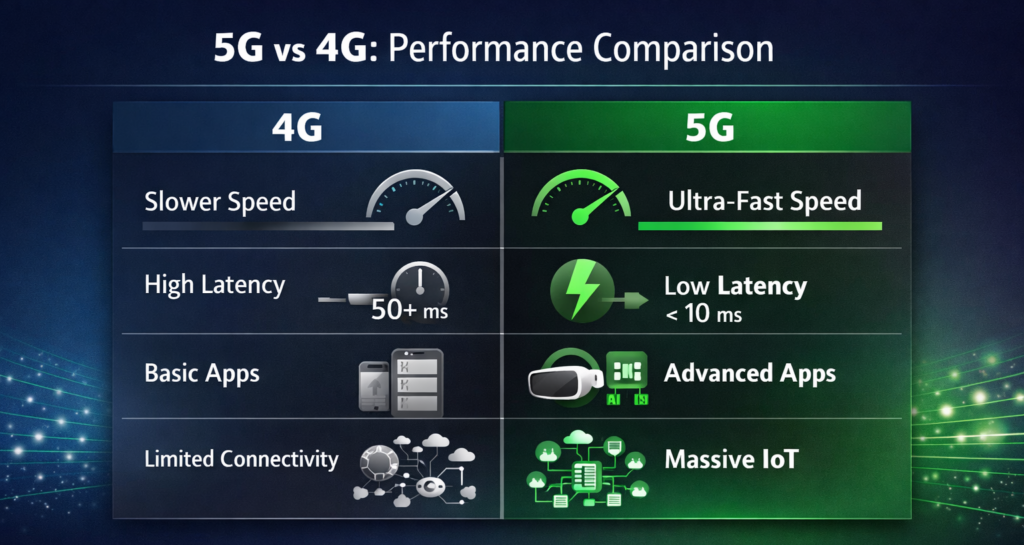
- Ultra‑Fast Speed: Up to 100x faster than 4G in real‑world scenarios
- Low Latency: Response time as low as 1 millisecond
- High Capacity: Supports millions of devices per square kilometer
- Improved Reliability: Stable connections for mission‑critical applications
Because of these features, 5G is becoming the backbone of next‑generation mobile applications.
How 5G Is Transforming Mobile Application Development
1️⃣ Lightning‑Fast App Performance
First and foremost, 5G dramatically reduces load times. Mobile applications that once took several seconds to load can now respond almost instantly.
As a result:
- Apps feel smoother and more responsive
- Real‑time features work without lag
- Users enjoy higher engagement and satisfaction
This improvement directly impacts user retention, a critical factor in mobile app success.
2️⃣ Ultra‑Low Latency Enables Real‑Time Experiences
Latency plays a crucial role in modern applications. With 5G’s near‑zero latency:
- Online gaming becomes truly real‑time
- Video conferencing apps deliver crystal‑clear interactions
- Financial and healthcare apps operate with precision
For example, telemedicine apps can now support remote surgeries and instant diagnostics—something impossible with older networks.
3️⃣ Rise of AR and VR Mobile Applications
Augmented Reality (AR) and Virtual Reality (VR) applications require massive data transfer and real‑time rendering. Previously, these technologies were limited by network constraints.
However, with 5G:
- AR shopping apps allow real‑time product visualization
- VR learning apps deliver immersive training experiences
- Real‑estate apps offer virtual property tours
Consequently, industries like education, retail, and entertainment are rapidly adopting AR/VR‑powered mobile apps.
4️⃣ IoT‑Powered Mobile Applications at Scale
Another major transformation comes from Internet of Things (IoT) integration. 5G supports massive device connectivity, making IoT‑driven mobile apps more efficient.
Examples include:
- Smart home control apps
- Industrial monitoring dashboards
- Smart city and traffic management applications
At the same time, businesses can collect real‑time data and automate decision‑making processes using mobile platforms.
5️⃣ Cloud & Edge Computing Integration
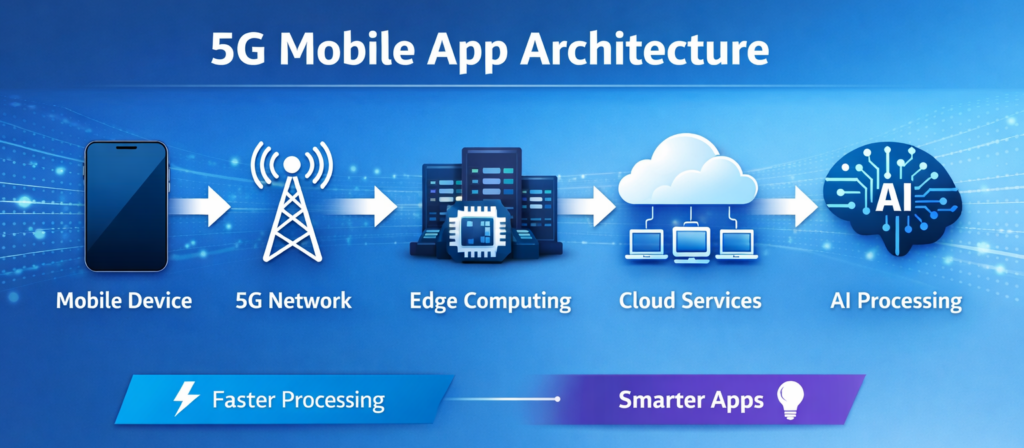
5G works seamlessly with edge computing, which processes data closer to the user instead of relying entirely on centralized servers.
Therefore:
- Mobile apps become faster and smarter
- Data processing costs decrease
- AI‑driven features work in real time
Companies building scalable mobile apps—such as Technobot System’s custom mobile solutions—benefit greatly from this architecture.
Role of AI and Machine Learning in 5G Mobile Apps
Artificial Intelligence and Machine Learning thrive on data. Since 5G enables rapid data transfer, AI‑powered mobile applications become more effective.
Key AI Use Cases with 5G
- Predictive analytics in business apps
- Personalized user experiences
- Smart chatbots and voice assistants
- Fraud detection in fintech applications
As a result, mobile apps are no longer reactive—they are proactive and intelligent.
Security Challenges and Opportunities with 5G
While 5G introduces new capabilities, it also raises security concerns.
Challenges
- Larger attack surface due to more connected devices
- Complex network architecture
Opportunities
- Advanced encryption techniques
- AI‑based threat detection
- Secure authentication mechanisms
By adopting robust security frameworks, developers can ensure safe and reliable mobile applications.
Business Benefits of 5G‑Enabled Mobile Applications
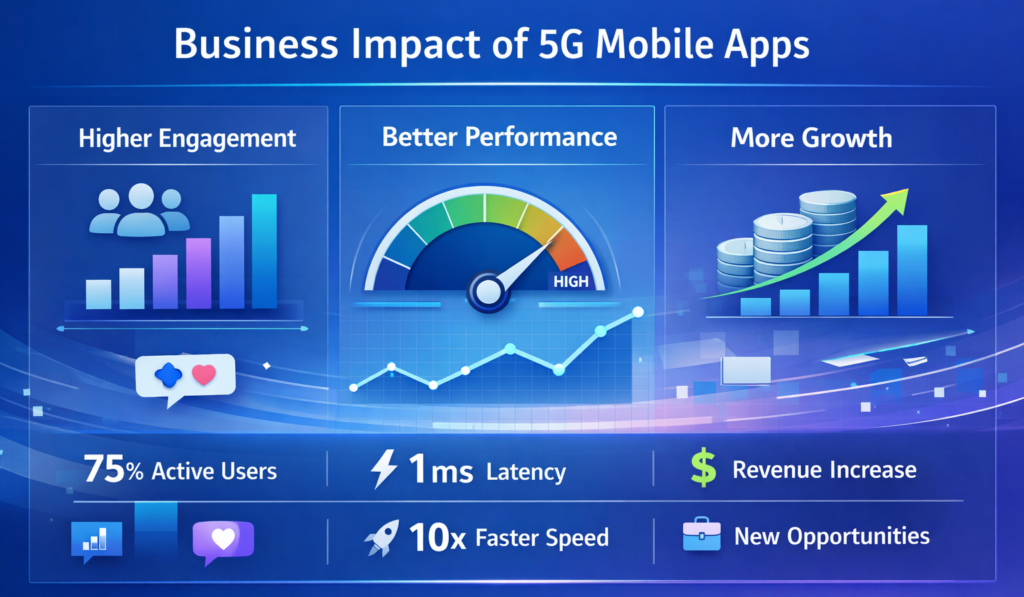
From a business perspective, 5G delivers measurable value.
- Faster go‑to‑market for innovative apps
- Improved customer engagement
- New revenue streams through immersive experiences
- Better scalability and performance
According to global industry reports, businesses that adopt 5G‑ready mobile applications early gain a significant competitive advantage.
Industry‑Specific Impact of 5G on Mobile Apps
Healthcare
Remote monitoring, telemedicine, and AI diagnostics become more reliable.
E‑Commerce
AR‑based try‑before‑you‑buy experiences increase conversions.
Education
Interactive, real‑time learning apps redefine digital education.
Manufacturing
IoT dashboards and predictive maintenance apps improve efficiency.
Rare but Powerful Insight: 5G as an Innovation Multiplier
Unlike previous technologies, 5G does not replace existing systems—it amplifies them. When combined with AI, IoT, blockchain, and cloud computing, it creates an ecosystem where innovation compounds.
This synergy is what makes 5G uniquely powerful.
Conclusion: The Future Is 5G‑Driven
In conclusion, 5G is changing the future of mobile applications by enabling faster performance, real‑time interactions, intelligent features, and immersive user experiences. Businesses that embrace this shift today position themselves as leaders tomorrow.
For organizations focused on innovation and scalability, such as Technobot System, investing in 5G‑ready mobile application development is no longer optional—it is essential.
As 5G adoption continues to grow globally, mobile applications will evolve beyond screens into powerful digital ecosystems that redefine how we live, work, and connect.