

In today’s fast-evolving digital landscape, businesses are constantly looking for ways to improve scalability, reduce costs, and enhance performance. One of the most effective strategies to achieve these goals is cloud migration. Whether you’re a startup or an established enterprise, moving your infrastructure, applications, and data to the cloud can unlock new levels of efficiency and innovation.
If you’re exploring digital transformation strategies or planning to upgrade your IT infrastructure, understanding the fundamentals of cloud migration is essential. Many businesses rely on tailored IT solutions and expert consultation, such as those offered through platforms like custom web and app development services, to ensure a smooth transition.
This comprehensive guide will walk you through cloud migration made simple, providing a step-by-step approach to help you plan, execute, and optimize your migration journey.
What is Cloud Migration?
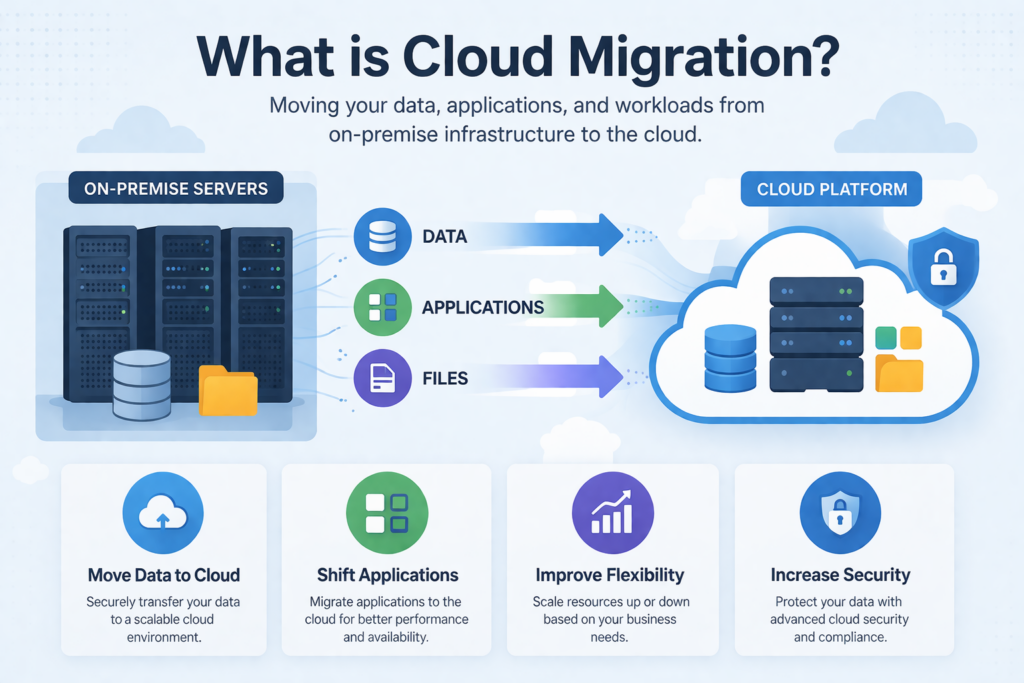
Cloud migration refers to the process of moving digital assets—such as data, applications, and IT processes—from on-premise infrastructure or legacy systems to cloud-based environments.
These environments may include:
- Public cloud (e.g., AWS, Azure, Google Cloud)
- Private cloud
- Hybrid cloud solutions
The goal is not just relocation, but transformation—enabling better performance, flexibility, and scalability.
According to AWS Cloud Migration Guide, organizations that migrate to the cloud often experience improved operational efficiency and reduced infrastructure costs.
Why Cloud Migration Matters for Modern Businesses
Before diving into the steps, it’s important to understand why cloud migration is becoming a priority.
Key Benefits of Cloud Migration
- Cost Optimization: Pay-as-you-go pricing reduces upfront infrastructure costs
- Scalability: Easily scale resources based on demand
- Improved Security: Advanced security protocols and compliance standards
- Flexibility: Remote access and improved collaboration
- Disaster Recovery: Built-in backup and recovery solutions
Moreover, cloud migration aligns with modern development practices such as DevOps and continuous integration, which are essential for agile businesses.
Types of Cloud Migration Strategies
Choosing the right migration strategy is critical. Common approaches include:
1. Rehosting (Lift and Shift)
Move applications without major changes.
2. Replatforming
Make minor optimizations without changing core architecture.
3. Refactoring
Rebuild applications to fully utilize cloud-native features.
4. Repurchasing
Switch to SaaS-based solutions.
5. Retiring
Remove outdated or unnecessary applications.
6. Retaining
Keep certain systems on-premise due to compliance or latency needs.
Each approach depends on business goals, budget, and technical complexity.
Cloud Migration Made Simple: Step-by-Step Guide
Now let’s break down the complete process of cloud migration made simple into actionable steps.
Step 1: Assess Your Current Infrastructure
Start by evaluating your existing IT environment.
Key Actions:
- Identify applications, databases, and workloads
- Analyze dependencies between systems
- Determine performance bottlenecks
- Evaluate security and compliance requirements
This step helps you understand what to migrate, what to optimize, and what to retire.
Step 2: Define Your Cloud Strategy
Once you’ve assessed your infrastructure, define a clear migration strategy.
Consider:
- Business objectives (cost, performance, scalability)
- Cloud deployment model (public, private, hybrid)
- Migration approach (rehosting, refactoring, etc.)
A well-defined strategy ensures alignment between technical execution and business goals.
Step 3: Choose the Right Cloud Provider
Selecting the right cloud provider is crucial.
Popular options include:
- Amazon Web Services (AWS)
- Microsoft Azure
- Google Cloud Platform
You can compare providers using resources like the Google Cloud Architecture Framework to evaluate performance, pricing, and services.
Step 4: Plan the Migration Process
Planning reduces risks and ensures smooth execution.
Key Planning Elements:
- Migration timeline
- Resource allocation
- Risk assessment
- Backup and recovery plans
At this stage, many businesses benefit from expert IT consulting or reading detailed technical insights available in resources like technology-focused blogs that explain real-world implementation strategies.
Step 5: Execute the Migration
Now it’s time to move your workloads.
Migration Techniques:
- Data replication
- Database migration tools
- Containerization (Docker, Kubernetes)
- Automated migration services
Ensure minimal downtime and maintain data integrity during this phase.
Step 6: Test and Validate
After migration, testing is essential.
Validate:
- Application performance
- Data accuracy
- Security configurations
- Integration with other systems
Testing ensures that everything functions as expected in the new environment.
Step 7: Optimize Your Cloud Environment
Migration is not the final step—optimization is ongoing.
Optimization Strategies:
- Monitor resource usage
- Implement auto-scaling
- Optimize storage and compute costs
- Enhance security policies
Continuous optimization ensures maximum ROI from your cloud investment.
Common Challenges in Cloud Migration
Even though cloud migration made simple sounds straightforward, businesses often face challenges.
1. Data Security Concerns
Sensitive data requires strict compliance and encryption.
2. Downtime Risks
Improper planning can lead to business disruptions.
3. Cost Overruns
Unoptimized resources can increase expenses.
4. Skill Gaps
Lack of cloud expertise can slow down migration.
5. Legacy System Complexity
Older systems may require extensive rework.
Addressing these challenges early can significantly improve migration success.
Best Practices for Successful Cloud Migration
To ensure a smooth transition, follow these proven best practices:
- Start Small: Begin with non-critical workloads
- Use Automation Tools: Reduce manual errors
- Ensure Data Backup: Always have rollback options
- Focus on Security: Implement strong access controls
- Train Your Team: Build cloud expertise internally
- Monitor Continuously: Use analytics and monitoring tools
These practices help reduce risks and improve efficiency.
Real-World Example of Cloud Migration
Consider a mid-sized eCommerce business running on legacy infrastructure.
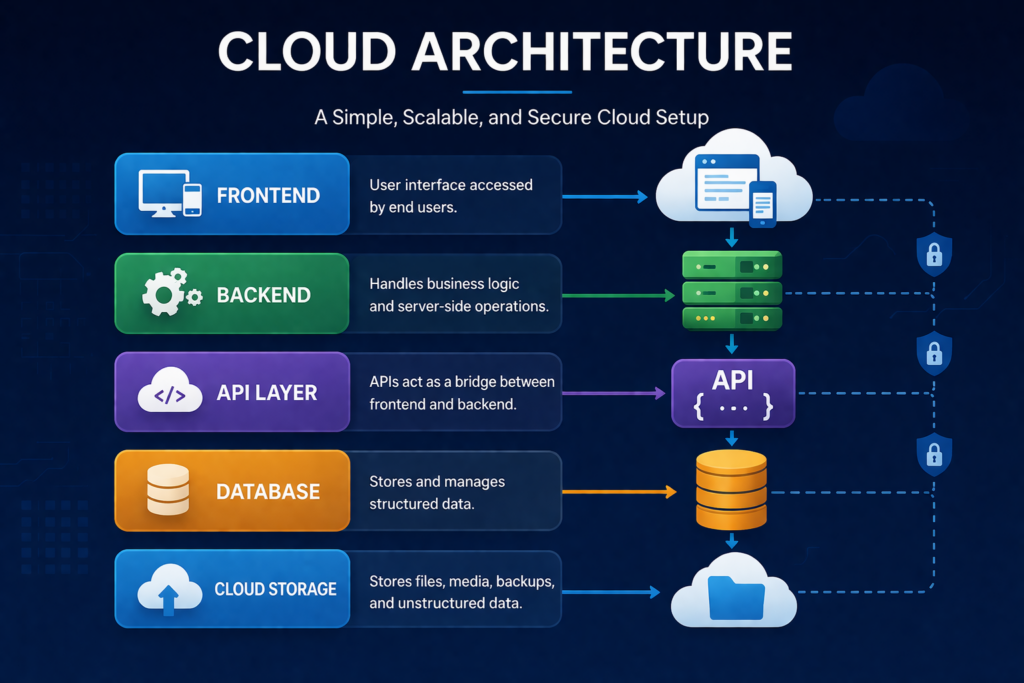
Before Migration:
- Frequent downtime
- High maintenance costs
- Limited scalability
After Migration:
- Improved uptime (99.9%)
- Reduced operational costs
- Faster page load times
- Better customer experience
This transformation highlights the real impact of cloud migration when executed correctly.
When Should You Consider Cloud Migration?
You should consider migrating to the cloud if:
- Your infrastructure costs are increasing
- Your applications need better scalability
- You want to support remote teams
- Your system performance is declining
- You’re planning digital transformation
Cloud migration is not just a technical upgrade—it’s a strategic business decision.
Future of Cloud Migration
The future of cloud migration is evolving rapidly with technologies like:
- AI-driven cloud optimization
- Serverless computing
- Edge computing
- Multi-cloud strategies
Businesses that adopt these innovations early will gain a competitive advantage.
Conclusion
Cloud migration made simple is not just a concept—it’s a practical approach that businesses can implement with the right strategy, tools, and expertise. By following a structured step-by-step process, organizations can minimize risks, reduce costs, and maximize performance.
From assessing your current infrastructure to optimizing your cloud environment, every stage plays a crucial role in ensuring success. Moreover, leveraging professional IT services and expert guidance—such as scalable solutions available through advanced IT consulting and development expertise—can further streamline the migration journey.
Ultimately, cloud migration is about transforming your business for the future. When done correctly, it empowers innovation, enhances agility, and drives long-term growth.