Customer expectations have changed dramatically over the last few years. Today’s users expect instant responses, personalized interactions, and seamless communication across websites, mobile apps, and social platforms. As businesses continue to scale digitally, traditional support systems often struggle to keep up with growing customer demands. This is where AI-powered chatbots are becoming a major game-changer in 2026.
Modern AI chatbots are no longer limited to scripted responses or basic FAQ handling. They now leverage advanced natural language processing (NLP), machine learning, sentiment analysis, and automation capabilities to deliver highly intelligent customer experiences. Businesses across industries are using AI-driven support systems to reduce response time, improve customer satisfaction, and optimize operational costs.
Companies investing in digital transformation and intelligent automation are increasingly integrating AI chatbots into their platforms to create faster and more scalable customer support systems. Organizations looking for modern digital solutions often explore advanced custom software development services to implement AI-powered communication systems tailored to their workflows and customer needs.
In this blog, we will explore how AI-powered chatbots are transforming customer support in 2026, their key technologies, business benefits, implementation strategies, future trends, and practical use cases for modern enterprises.
The Evolution of Customer Support
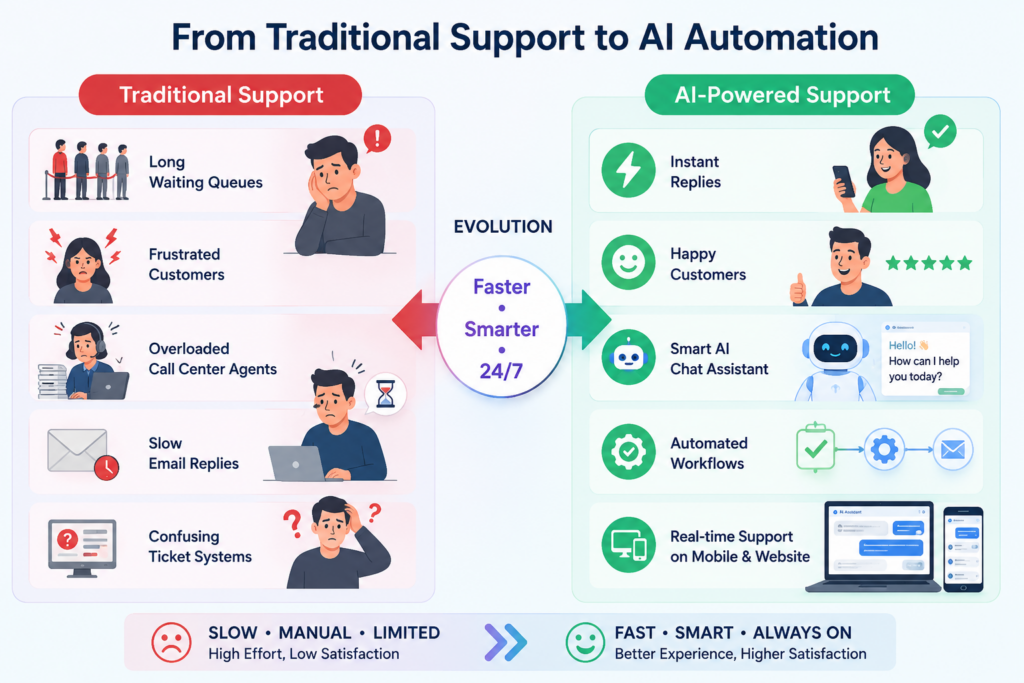
Customer support has evolved from email ticket systems and call centers to real-time conversational experiences. Earlier support models depended heavily on human agents, which created limitations such as:
- Long waiting times
- High operational costs
- Limited support availability
- Inconsistent customer experiences
- Difficulty handling large-scale queries
However, AI-driven systems are reshaping this landscape by enabling 24/7 automated interactions without compromising quality.
From Rule-Based Bots to Intelligent AI Assistants
Traditional chatbots operated on predefined rules and keyword matching. Although useful for basic inquiries, they failed when conversations became complex.
In contrast, modern AI-powered chatbots in 2026 can:
- Understand natural language context
- Detect user intent accurately
- Learn from historical interactions
- Personalize conversations
- Integrate with CRM and business tools
- Handle multilingual communication
As a result, businesses can now provide human-like customer interactions at scale.
Why AI-Powered Chatbots Are Essential in 2026
The rise of digital-first businesses has made instant communication a necessity rather than a luxury. Customers expect support within seconds, regardless of time zone or platform.
According to research from Gartner, conversational AI technologies are becoming one of the most influential technologies in customer engagement strategies.
Growing Customer Expectations
Modern users expect:
- Instant responses
- Personalized recommendations
- Omnichannel communication
- Consistent experiences
- Self-service support options
Businesses that fail to meet these expectations often experience lower customer retention and reduced trust.
AI Enables Scalable Support
AI-powered chatbots can simultaneously manage thousands of conversations, making them ideal for:
- E-commerce businesses
- SaaS platforms
- Healthcare applications
- Banking systems
- Educational platforms
- IT service providers
This scalability significantly reduces support bottlenecks during peak traffic periods.
Key Technologies Behind AI-Powered Chatbots
The effectiveness of AI-powered chatbots depends on several advanced technologies working together.
Natural Language Processing (NLP)
NLP allows chatbots to understand and interpret human language naturally. Instead of relying solely on keywords, modern systems analyze:
- Context
- Tone
- Intent
- Sentence structure
- Conversation history
This helps create smoother and more accurate conversations.
Machine Learning
Machine learning enables chatbots to improve continuously based on interactions. Over time, AI systems become more effective at:
- Understanding customer behavior
- Predicting user intent
- Resolving recurring issues
- Recommending relevant solutions
Generative AI
Generative AI models are transforming chatbot capabilities by enabling dynamic and human-like responses.
Platforms powered by large language models can now:
- Generate detailed responses
- Summarize conversations
- Draft emails
- Provide technical guidance
- Handle complex troubleshooting
Businesses are increasingly integrating generative AI into customer-facing platforms to improve communication quality.
Sentiment Analysis
Sentiment analysis allows chatbots to identify emotions in customer conversations. If frustration or urgency is detected, the system can automatically escalate the issue to a human agent.
This creates a balanced support ecosystem where AI and human agents work together efficiently.
Major Benefits of AI-Powered Chatbots for Businesses
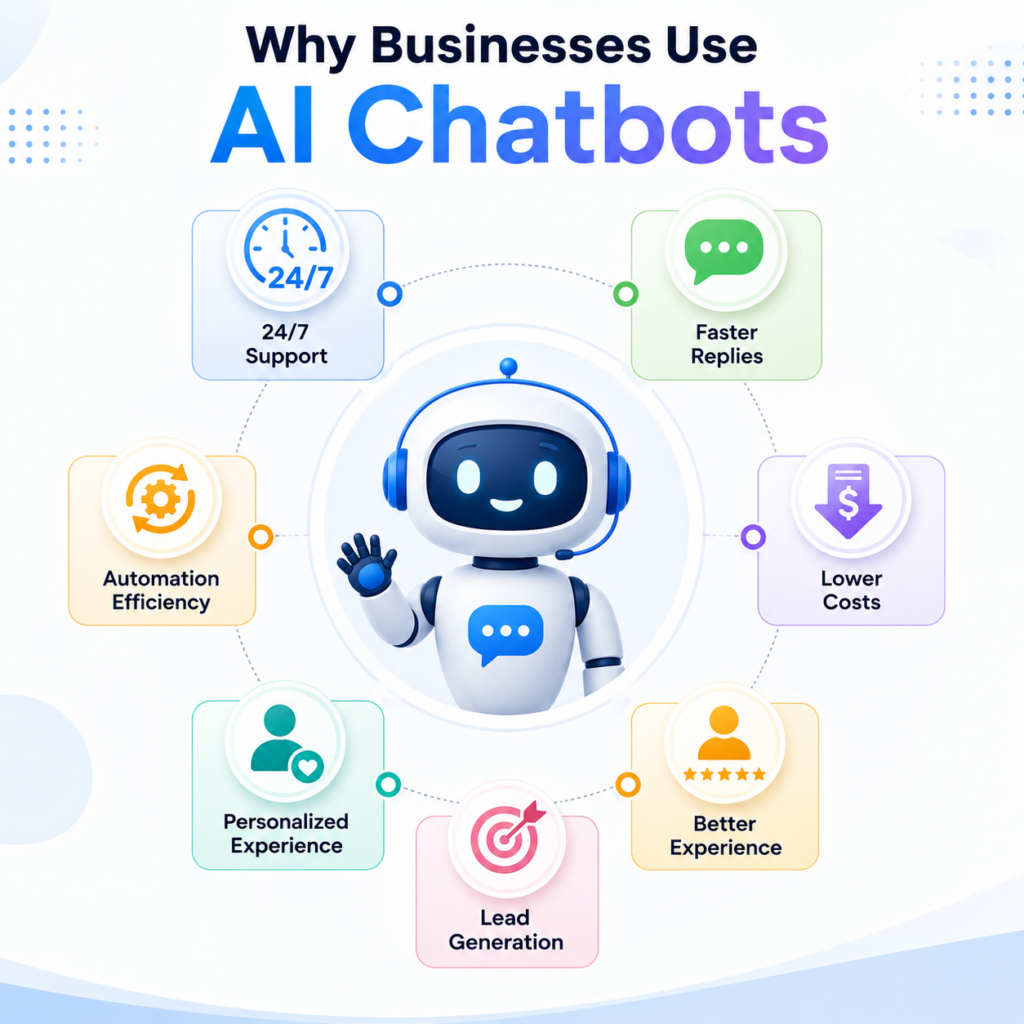
AI-powered chatbots offer measurable business advantages that directly impact customer satisfaction and operational efficiency.
1. 24/7 Customer Support
One of the biggest advantages of AI chatbots is continuous availability.
Unlike traditional support teams, AI systems can operate around the clock without downtime. This ensures customers receive immediate assistance anytime they need help.
For global businesses serving multiple time zones, this capability is especially valuable.
2. Faster Response Time
Customers dislike waiting. AI-powered chatbots can instantly respond to queries, significantly improving user experience.
Common tasks handled instantly include:
- Order tracking
- Appointment booking
- Password resets
- Product recommendations
- Account inquiries
- Technical troubleshooting
Faster responses often lead to higher customer satisfaction and increased conversions.
3. Reduced Operational Costs
Hiring and managing large support teams can be expensive. AI chatbots reduce support workload by automating repetitive tasks.
Businesses can:
- Reduce manual support costs
- Optimize agent productivity
- Minimize infrastructure expenses
- Improve support efficiency
This allows human agents to focus on high-value or complex customer interactions.
4. Personalized Customer Experiences
Modern AI systems analyze customer behavior, purchase history, and preferences to deliver personalized responses.
For example, chatbots can:
- Recommend products based on browsing behavior
- Suggest relevant services
- Provide customized troubleshooting
- Offer targeted promotions
Personalization improves engagement and strengthens customer relationships.
5. Improved Lead Generation
AI-powered chatbots are also becoming valuable marketing and sales tools.
They can:
- Qualify leads automatically
- Capture customer information
- Recommend products
- Schedule demos
- Guide users through sales funnels
Many businesses now integrate conversational AI into websites to improve lead conversion rates.
Organizations developing advanced digital customer platforms often combine chatbot automation with web application development solutions to create intelligent and scalable customer experiences.
AI Chatbots Across Different Industries
AI-powered customer support is no longer limited to tech companies. Multiple industries are rapidly adopting chatbot technology.
E-Commerce
E-commerce businesses use chatbots for:
- Product recommendations
- Cart recovery
- Order tracking
- Return processing
- Customer inquiries
AI helps improve shopping experiences while increasing conversion rates.
Healthcare
Healthcare providers use AI chatbots to:
- Schedule appointments
- Answer medical FAQs
- Send medication reminders
- Assist patient onboarding
However, healthcare chatbots must follow strict compliance and privacy regulations.
Banking and Finance
Banks use AI chatbots for:
- Account assistance
- Fraud alerts
- Transaction tracking
- Loan inquiries
- Financial guidance
Security and encryption play a critical role in these systems.
Education
Educational platforms leverage AI chatbots for:
- Student support
- Course recommendations
- Enrollment assistance
- Learning guidance
This improves accessibility and communication efficiency for institutions.
IT and SaaS Platforms
Software companies use AI-powered support systems to automate:
- Technical troubleshooting
- Ticket routing
- User onboarding
- Knowledge base assistance
Businesses focused on digital innovation are increasingly adopting AI-driven automation strategies similar to the trends discussed in modern AI and business transformation blogs.
Challenges Businesses Must Consider
Although AI-powered chatbots provide significant benefits, implementation also comes with challenges.
Data Privacy and Security
Customer support systems handle sensitive information, making security a top priority.
Businesses must ensure:
- Secure API integrations
- Data encryption
- Compliance with privacy laws
- Safe customer authentication
The IBM AI Security Guide provides valuable insights into AI governance and security practices.
Over-Automation Risks
While automation improves efficiency, excessive reliance on AI can create frustrating customer experiences.
Businesses should avoid:
- Removing human support entirely
- Using robotic communication
- Ignoring emotional interactions
The ideal approach combines AI automation with human expertise.
Training and Maintenance
AI chatbots require ongoing updates and training.
Businesses must regularly:
- Improve conversation models
- Update datasets
- Analyze customer interactions
- Monitor chatbot accuracy
Without proper maintenance, chatbot performance can decline over time.
Best Practices for Implementing AI-Powered Chatbots
Successful chatbot implementation requires strategic planning rather than simply adding a chatbot widget to a website.
Define Clear Business Goals
Before implementation, businesses should identify:
- Customer pain points
- Support bottlenecks
- Automation opportunities
- Desired outcomes
Clear objectives help measure ROI effectively.
Choose the Right AI Platform
Different chatbot platforms offer different capabilities.
Important factors include:
- NLP accuracy
- Integration flexibility
- Scalability
- Security features
- Analytics support
The right platform should align with long-term business goals.
Design Human-Centered Conversations
Chatbots should communicate naturally and professionally.
Businesses should focus on:
- Conversational tone
- Clear responses
- Simple navigation
- Smart escalation options
User-friendly experiences significantly improve adoption rates.
Integrate with Existing Systems
AI chatbots become more powerful when integrated with:
- CRM systems
- Helpdesk platforms
- ERP software
- Analytics tools
- E-commerce platforms
This creates centralized and intelligent support workflows.
Continuously Monitor Performance
Performance tracking helps improve chatbot effectiveness over time.
Key metrics include:
- Resolution rates
- Customer satisfaction scores
- Average response time
- Escalation frequency
- User engagement
Data-driven optimization ensures continuous improvement.
The Role of Generative AI in Customer Support
Generative AI is redefining customer support capabilities in 2026.
Unlike traditional bots, generative AI systems can create dynamic responses based on context and intent.
Smarter Conversations
Generative AI enables:
- Context-aware responses
- Human-like dialogue
- Better troubleshooting guidance
- Multi-step problem solving
This creates more natural customer experiences.
AI Copilots for Human Agents
Modern support systems are also introducing AI copilots that assist human agents in real time.
These systems can:
- Suggest responses
- Summarize tickets
- Recommend solutions
- Analyze sentiment
As a result, support teams become faster and more efficient.
Future Trends in AI-Powered Chatbots
The future of AI-powered customer support will continue evolving rapidly.
Voice-Based AI Assistants
Voice AI is becoming increasingly popular for customer service applications.
Businesses are integrating conversational voice systems into:
- Mobile apps
- Smart devices
- Customer portals
- Call center systems
Hyper-Personalization
Future AI systems will use advanced behavioral analytics to provide highly personalized customer experiences.
This may include:
- Predictive support
- Personalized offers
- Intelligent recommendations
- Context-aware interactions
Multilingual Global Support
AI-powered translation models are improving significantly.
Businesses will increasingly offer real-time multilingual support without requiring large regional support teams.
Proactive Customer Support
Future AI systems will predict issues before customers even report them.
For example:
- Detecting subscription issues
- Identifying failed transactions
- Predicting technical errors
- Sending preventive alerts
Proactive support can dramatically improve customer satisfaction.
Why Businesses Should Invest in AI Chatbots Now
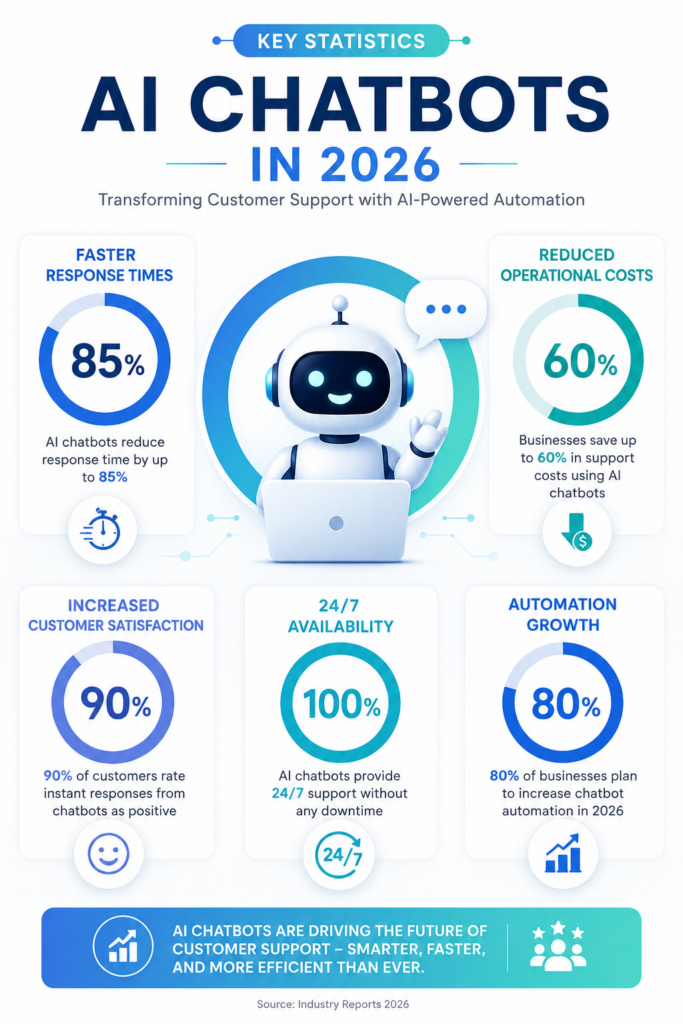
AI-powered chatbots are no longer experimental technologies. They have become essential tools for businesses that want to remain competitive in a digital-first economy.
Organizations investing early in conversational AI gain advantages such as:
- Better customer retention
- Faster support operations
- Lower service costs
- Improved scalability
- Stronger digital experiences
Additionally, businesses that combine AI automation with modern software infrastructure can build long-term operational efficiency and customer loyalty.
As customer expectations continue to evolve, businesses that delay AI adoption may struggle to compete with digitally advanced competitors.
Conclusion
AI-powered chatbots are transforming customer support in 2026 by enabling faster, smarter, and more personalized customer interactions. Modern AI technologies such as NLP, machine learning, generative AI, and sentiment analysis are helping businesses automate support operations while improving overall customer satisfaction.
From e-commerce and healthcare to banking and SaaS platforms, conversational AI is becoming a core part of digital transformation strategies. However, successful implementation requires thoughtful planning, proper security practices, continuous optimization, and a balanced combination of AI automation and human support.
Businesses that invest in intelligent customer support systems today are positioning themselves for long-term growth, scalability, and competitive advantage. Companies exploring modern AI-driven digital transformation often benefit from partnering with experienced technology solution providers offering scalable custom application development services tailored to evolving business requirements.
As AI technology continues to advance, AI-powered chatbots will play an even bigger role in shaping the future of customer communication, engagement, and business success.