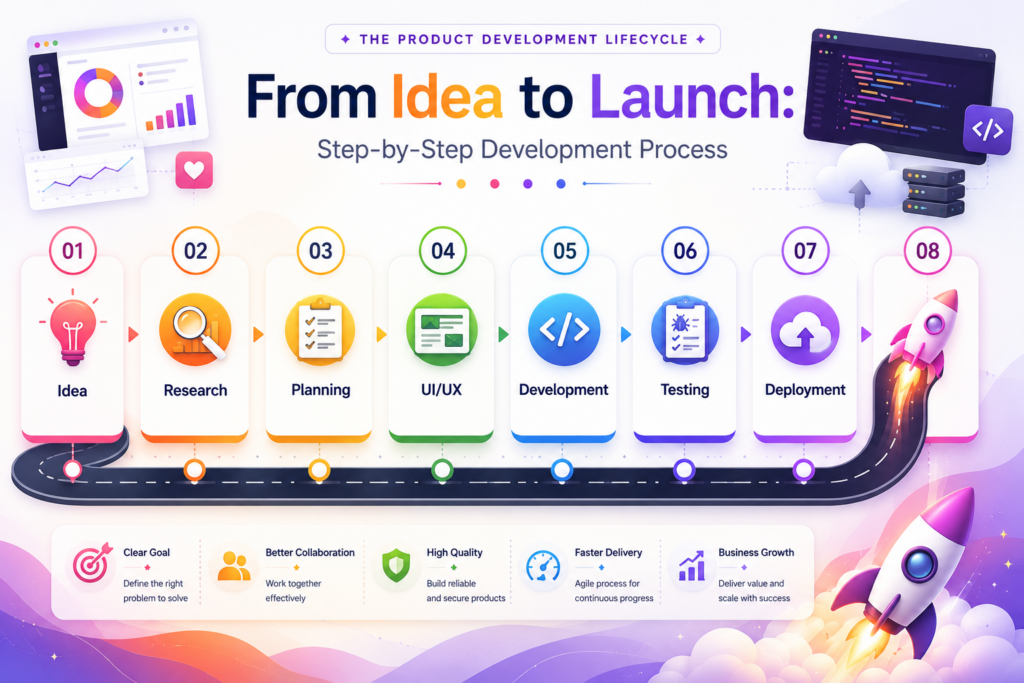
Today’s most successful digital products rarely become successful by accident. Behind every popular mobile app, SaaS platform, enterprise software, or custom business solution is a carefully planned journey that transforms an idea into a reliable, scalable, and user-friendly product.
Whether you’re a startup founder validating a new concept or an established business planning digital transformation, understanding how successful digital products go from idea to launch can significantly improve your chances of building a solution that delivers real business value.
Many organizations begin their journey by partnering with experienced software development companies that understand product strategy, user experience, development, testing, and deployment. Working with a trusted technology partner such as Technobot System helps businesses turn innovative concepts into practical, scalable digital solutions while minimizing costly mistakes during development.
In this guide, we’ll explore every stage of the product development lifecycle, best practices used by successful technology companies, and practical insights that can help businesses launch digital products with confidence.
Why Great Ideas Alone Are Not Enough
Every year, thousands of software products enter the market.
Only a small percentage achieve long-term success.
The difference usually isn’t the originality of the idea—it is the execution.
Successful digital products solve real problems by combining:
- Strong market research
- User-centered design
- Strategic planning
- Agile development
- Continuous testing
- Customer feedback
- Ongoing improvements
Instead of jumping directly into development, successful companies validate assumptions before investing significant time and resources.
Understanding How Successful Digital Products Go from Idea to Launch
Every digital product follows a lifecycle.
Although each project is unique, most successful products move through similar stages.
Stage 1: Idea Validation
Everything begins with identifying a genuine problem.
Instead of asking:
“Can we build this?”
Successful teams ask:
“Should we build this?”
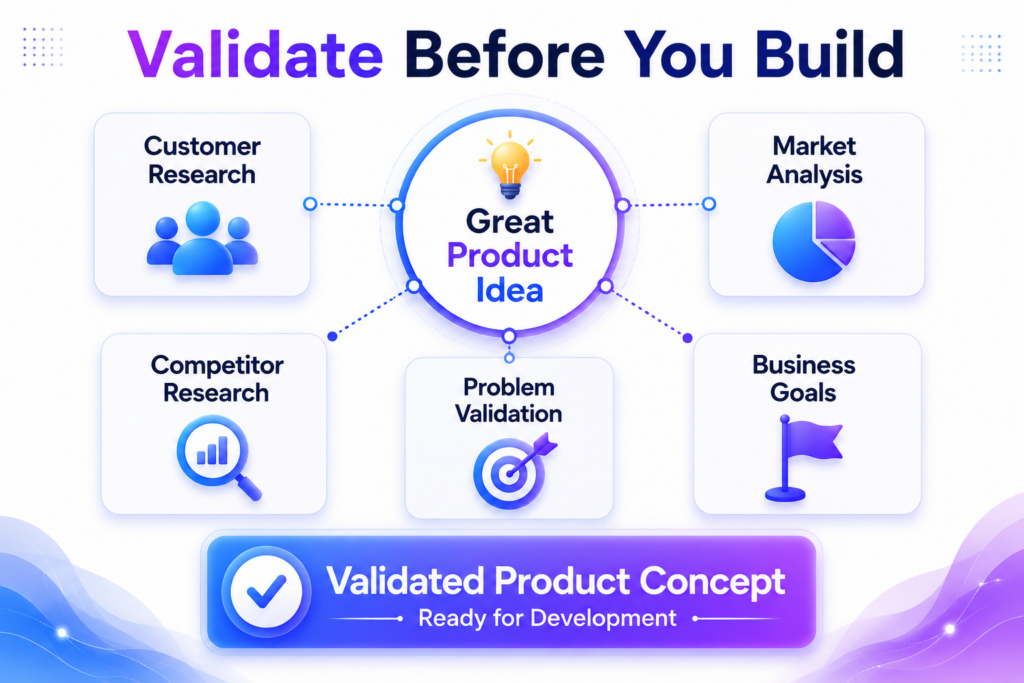
Idea validation includes:
- Customer interviews
- Market analysis
- Competitor research
- Industry trends
- User pain points
- Revenue opportunities
For example, if businesses struggle with manual workflows, developing workflow automation software may create real market demand.
Without validation, companies risk building products nobody actually needs.
Stage 2: Market Research
Understanding competitors helps identify opportunities.
Market research answers questions like:
- Who are the competitors?
- What features do users appreciate?
- Where are existing products weak?
- Which customer segments remain underserved?
Resources such as Gartner’s technology insights and McKinsey Digital provide valuable information about digital transformation trends, customer expectations, and emerging technologies that can shape product strategy.
The objective is not copying competitors.
It is identifying opportunities to provide greater value.
Defining Product Vision and Business Goals
Once validation is complete, the next step is establishing a clear vision.
Successful digital products answer three important questions:
Who is the target audience?
Examples include:
- Small businesses
- Healthcare providers
- Educational institutions
- Manufacturers
- Retail companies
- Enterprise organizations
What problem will the product solve?
Customers don’t buy software.
They buy solutions.
Instead of selling features, successful products solve:
- Manual work
- Slow communication
- Poor reporting
- Data management challenges
- Customer service issues
- Operational inefficiencies
How will success be measured?
Define measurable goals like:
- User acquisition
- Monthly recurring revenue
- Customer retention
- Daily active users
- Reduced operating costs
- Increased productivity
Clear KPIs keep the project focused throughout development.
Building the Right Product Roadmap
A roadmap acts as the project’s strategic blueprint.
It outlines:
- Product goals
- Development phases
- Major milestones
- Release schedule
- Feature priorities
- Resource allocation
Successful teams avoid adding every requested feature immediately.
Instead, they focus on delivering maximum value first.
Creating an MVP (Minimum Viable Product)
One of the biggest mistakes businesses make is trying to launch a “perfect” product.
Instead, modern software development recommends creating an MVP.
An MVP includes only essential functionality required to solve the user’s primary problem.
Typical MVP features include:
- User registration
- Login
- Core workflow
- Dashboard
- Basic reporting
- Essential integrations
Everything else can be added later.
This approach reduces:
- Development costs
- Project risks
- Time to market
It also allows businesses to collect real customer feedback much earlier.
Designing Exceptional User Experience
Excellent technology can still fail if users struggle to navigate it.
That’s why UX and UI design are essential.
Successful design focuses on:
User Research
Understanding:
- User behavior
- Expectations
- Daily workflows
- Common frustrations
Wireframes
Wireframes visualize:
- Navigation
- Screen layouts
- User journeys
- Feature placement
They reduce expensive design changes later.
Interactive Prototypes
Clickable prototypes allow stakeholders to experience the product before development begins.
This improves communication between:
- Clients
- Designers
- Developers
- Product managers
As businesses continue improving digital experiences, many organizations also explore insights shared in the Technobot System Blog, where software development trends, emerging technologies, and practical implementation strategies are regularly discussed.
Choosing the Right Technology Stack
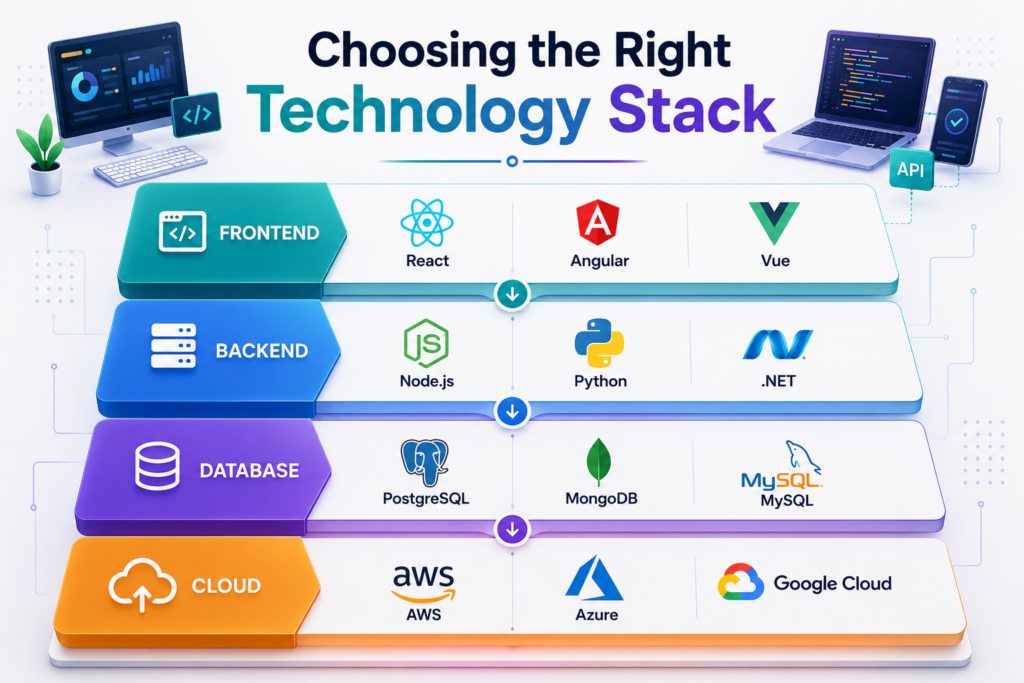
Technology decisions affect long-term success.
Factors include:
- Scalability
- Performance
- Security
- Maintenance
- Development speed
- Integration capabilities
Popular frontend technologies include:
- React
- Angular
- Vue
Backend technologies include:
- Node.js
- .NET
- Java
- Python
Database options:
- PostgreSQL
- MySQL
- MongoDB
Cloud platforms:
- AWS
- Microsoft Azure
- Google Cloud
The right stack depends on project requirements—not trends.
Agile Development Makes Products Better
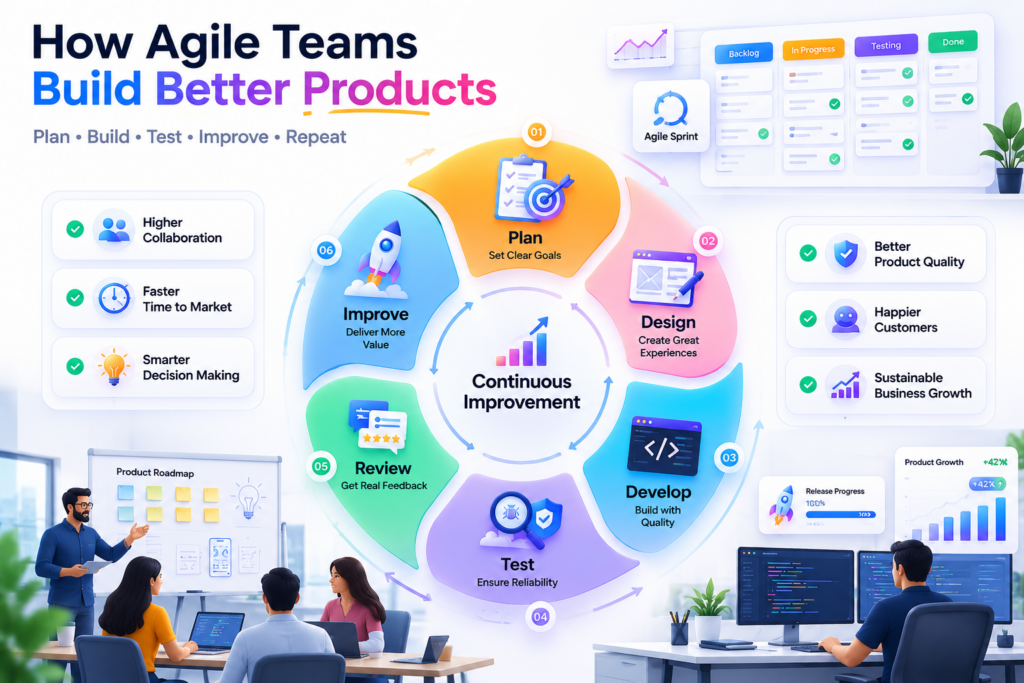
Traditional software development often delayed customer feedback until launch.
Agile changed everything.
Instead of one massive release, Agile delivers software in smaller iterations.
Benefits include:
- Faster delivery
- Better collaboration
- Continuous testing
- Easier changes
- Higher customer satisfaction
Development usually occurs in short sprints lasting one to three weeks.
After every sprint:
- Features are reviewed.
- Improvements are planned.
- Customer feedback is incorporated.
This iterative process significantly improves product quality.
Prioritizing Security from Day One
Security should never be treated as an afterthought.
Successful digital products integrate security throughout development.
Important practices include:
- Secure authentication
- Role-based access control
- Data encryption
- Secure APIs
- Regular vulnerability testing
- Dependency updates
- Compliance requirements
Organizations can also follow the OWASP Top 10 to understand the most common web application security risks and implement proven mitigation strategies.
Building security into the development lifecycle protects both businesses and users.
Comprehensive Testing Before Launch
Testing is much more than finding bugs.
It ensures reliability.
Testing typically includes:
Functional Testing
Confirms every feature works correctly.
Performance Testing
Measures:
- Speed
- Scalability
- Load handling
- Response time
Security Testing
Identifies vulnerabilities before attackers do.
Compatibility Testing
Ensures software functions consistently across:
- Browsers
- Devices
- Operating systems
User Acceptance Testing (UAT)
Real users validate whether the product solves their problems effectively.
Their feedback often reveals improvements that internal teams overlook.
Preparing for Product Launch
Launching software involves much more than deploying code.
Successful launches include:
Infrastructure Readiness
- Cloud deployment
- Monitoring
- Auto scaling
- Backups
Documentation
Prepare:
- User guides
- API documentation
- Administrator manuals
Marketing Preparation
Coordinate:
- Website updates
- Product announcements
- Social media campaigns
- Email marketing
- Sales enablement
Customer Support
Ensure support teams understand:
- Features
- Common issues
- Troubleshooting steps
A smooth launch builds trust and encourages early adoption.
Monitoring Performance After Launch
Product launch is only the beginning.
Successful companies continuously monitor:
- User engagement
- Feature adoption
- Crash reports
- Conversion rates
- Customer satisfaction
- Retention metrics
Analytics platforms help teams understand user behavior and identify opportunities for improvement.
Continuous optimization keeps products competitive.
Common Mistakes That Delay Product Success
Many projects struggle because of avoidable mistakes.
These include:
- Skipping market validation
- Ignoring customer feedback
- Overbuilding initial releases
- Poor communication
- Weak project planning
- Lack of testing
- Choosing unsuitable technologies
- Underestimating security
Recognizing these risks early improves project outcomes.
The Value of Working with an Experienced Development Partner
Developing a successful digital product requires expertise across multiple disciplines.
A capable development partner contributes:
- Business analysis
- Product strategy
- UI/UX design
- Software architecture
- Full-stack development
- Quality assurance
- Cloud deployment
- Ongoing maintenance
For businesses seeking custom software, mobile applications, enterprise platforms, or scalable web solutions, experienced development teams can significantly reduce technical complexity while accelerating product delivery. Organizations evaluating technology partners can explore the Custom Software Development Services offered by Technobot System to understand how tailored software solutions help businesses transform ideas into production-ready digital products.
The right collaboration enables businesses to focus on innovation while experienced professionals manage the technical execution.
Future Trends Shaping Digital Product Development
Technology continues evolving rapidly.
Future-ready products increasingly incorporate:
- Artificial Intelligence
- Machine Learning
- Low-code development
- Cloud-native architecture
- Edge computing
- Internet of Things (IoT)
- Predictive analytics
- Generative AI capabilities
Businesses that adapt early often gain competitive advantages through faster innovation and improved customer experiences.
Conclusion
Understanding how successful digital products go from idea to launch is essential for businesses looking to build software that delivers long-term value. Success is not determined solely by a great concept—it depends on strategic planning, market validation, thoughtful design, agile development, rigorous testing, and continuous improvement after launch.
Organizations that invest time in each stage of the product development lifecycle are far more likely to create solutions that meet user expectations, scale with business growth, and remain competitive in a rapidly evolving digital landscape. Whether you’re developing a customer-facing application, an internal business platform, or a custom enterprise solution, partnering with experienced professionals can streamline the journey from concept to deployment.
By combining innovation with proven software engineering practices, businesses can confidently transform ideas into successful digital products that create measurable value for customers and sustainable growth for the organization.