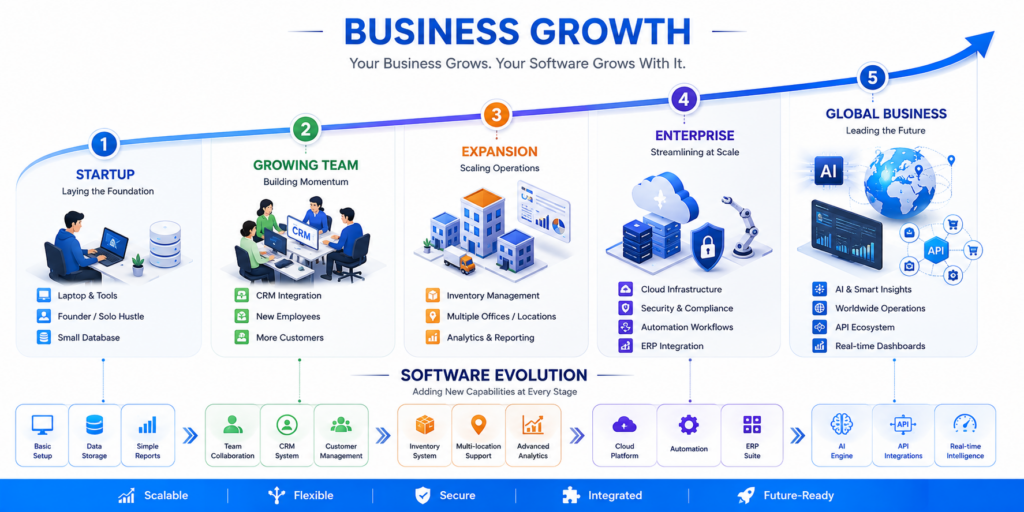
Businesses rarely stay the same for long. A startup may begin with a small customer base, a handful of employees, and simple workflows. However, as demand grows, operations become more complex. New departments emerge, customer expectations increase, and digital processes evolve. This is where one important question arises: Can your software grow with your business?
Choosing software that meets today’s requirements is relatively easy. The real challenge is selecting solutions that continue delivering value as your organization expands. Scalable software is no longer a luxury—it is a strategic investment that determines whether your business can adapt to future opportunities without constant system replacements.
Organizations that invest in scalable technology experience smoother operations, better customer experiences, and improved long-term cost efficiency. Whether you’re planning a custom business application, customer portal, ERP system, or enterprise website, designing for growth should always be part of the development strategy.
Businesses looking to build scalable digital solutions often explore experienced software development partners such as Technobot System, whose expertise in custom software development focuses on creating applications that adapt as business requirements evolve rather than forcing companies into one-size-fits-all solutions.
Understanding Software Scalability
The software growth with your business concept refers to a software system’s ability to handle increasing workloads, users, data, and business processes without sacrificing performance or requiring a complete rebuild.
Instead of replacing software every few years, scalable systems are designed with flexibility from the beginning.
A scalable application can support:
- More users
- Higher transaction volumes
- Additional business locations
- New integrations
- Advanced reporting
- Expanded product or service offerings
- Future technologies
Scalability ensures that technology becomes an enabler of growth instead of becoming a limitation.
Why Software Growth with Your Business Matters
Every growing company eventually reaches a point where existing systems begin creating bottlenecks. Tasks that once took minutes start taking hours. Reports become difficult to generate. Customer requests increase faster than internal processes can handle.
When software cannot keep up, business growth slows down.
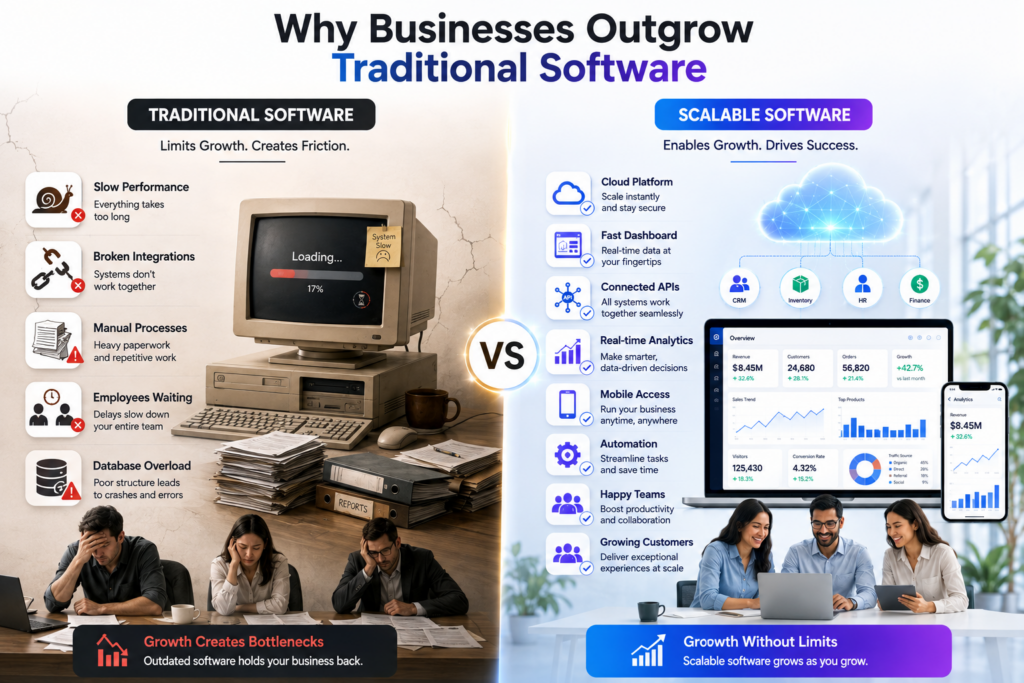
Common signs include:
- Slow application performance
- Frequent downtime
- Manual workarounds
- Data duplication
- Security concerns
- Poor collaboration between departments
- Limited reporting capabilities
Businesses often underestimate how expensive these issues become over time.
Instead of investing in multiple disconnected tools, scalable software provides a long-term foundation for continuous growth.
The Hidden Cost of Outgrowing Your Software
Replacing software isn’t just about purchasing a new system.
Organizations also face:
- Data migration costs
- Employee retraining
- Business downtime
- Process redesign
- Integration redevelopment
- Security testing
- Customer disruption
These hidden expenses frequently exceed the original software investment.
Building scalable architecture from the beginning significantly reduces these future risks.
Key Characteristics of Scalable Software
Not every application is built for long-term growth. High-quality scalable software usually includes several important characteristics.
Modular Architecture
Modern applications are developed using modular components instead of one large system.
This approach allows developers to:
- Add new features
- Replace individual modules
- Update functionality
- Improve performance
without affecting the entire application.
Cloud Compatibility
Cloud infrastructure has transformed software scalability.
Platforms such as Microsoft Azure, Amazon Web Services, and Google Cloud allow businesses to scale computing resources whenever demand increases.
Organizations can learn more about cloud scalability through Microsoft’s official architecture guidance:
Cloud-ready applications eliminate many hardware limitations associated with traditional on-premise software.
Flexible Database Design
Growing businesses generate growing amounts of information.
Customer records
Orders
Invoices
Inventory
Employee data
Analytics
A scalable database structure ensures that increasing data volumes do not slow system performance.
API Integration
Modern businesses rely on multiple digital tools.
Examples include:
- CRM software
- Accounting systems
- Payment gateways
- Marketing platforms
- HR software
- Customer support systems
Scalable software should support API integrations so new services can be connected without rebuilding the entire platform.
The importance of APIs is highlighted in Google’s API design best practices.
Strong Security Foundation
Growth attracts attention—not only from customers but also from cyber threats.
Scalable software should support:
- Multi-factor authentication
- Role-based permissions
- Data encryption
- Secure backups
- Compliance requirements
- Continuous monitoring
Security should expand alongside business operations.
Business Benefits of Scalable Software
Better Return on Investment
While scalable software may require thoughtful planning initially, it often reduces future redevelopment costs.
Instead of rebuilding systems every few years, businesses continue expanding existing functionality.
This leads to stronger long-term ROI.
Improved Customer Experience
Customers expect:
- Fast websites
- Responsive applications
- Secure transactions
- Reliable service
As user numbers grow, scalable systems continue delivering consistent experiences.
Customer satisfaction directly impacts retention and business reputation.
Faster Business Expansion
Suppose a company opens new offices in different cities.
A scalable system can quickly support:
- New employees
- Additional customers
- Multiple warehouses
- Regional pricing
- Local compliance
without creating operational chaos.
Easier Feature Development
Business requirements constantly change.
Examples include:
- AI-powered recommendations
- Mobile applications
- Customer dashboards
- Automated reporting
- Workflow automation
Scalable architecture allows these features to be introduced gradually.
Organizations interested in planning future-ready digital solutions can also explore practical insights shared through the Technobot System blog, where modern software development strategies and technology trends are discussed for growing businesses.
Signs Your Business Needs Scalable Software
Many organizations delay upgrades until problems become unavoidable.
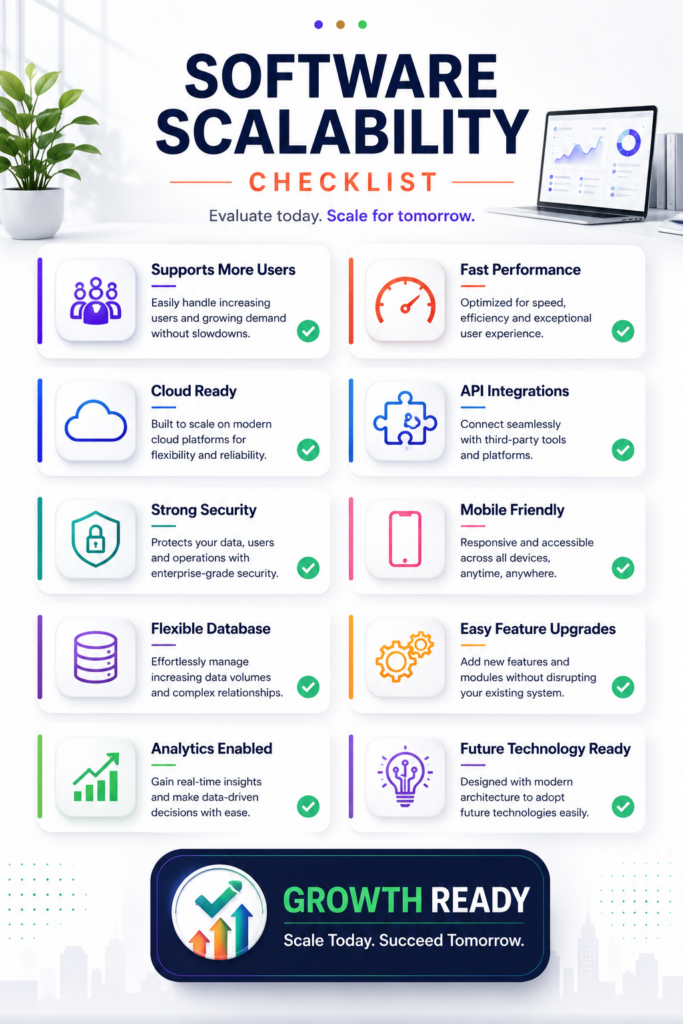
You may already need scalable software if:
Your Team Has Doubled
More employees mean more users accessing the system simultaneously.
Older software often struggles with concurrent usage.
Data Is Growing Rapidly
Large databases eventually affect performance.
Slow searches
Delayed reports
Long backup times
These are common indicators.
Multiple Systems Don’t Communicate
Employees repeatedly entering the same information into different platforms wastes time and increases errors.
Integration-ready software solves this issue.
Customers Expect More Digital Services
Today’s customers want:
- Self-service portals
- Online payments
- Live order tracking
- Personalized dashboards
- Mobile accessibility
These features require scalable architecture.
Custom Software vs Off-the-Shelf Software
One of the biggest decisions businesses face is whether to purchase ready-made software or invest in custom development.
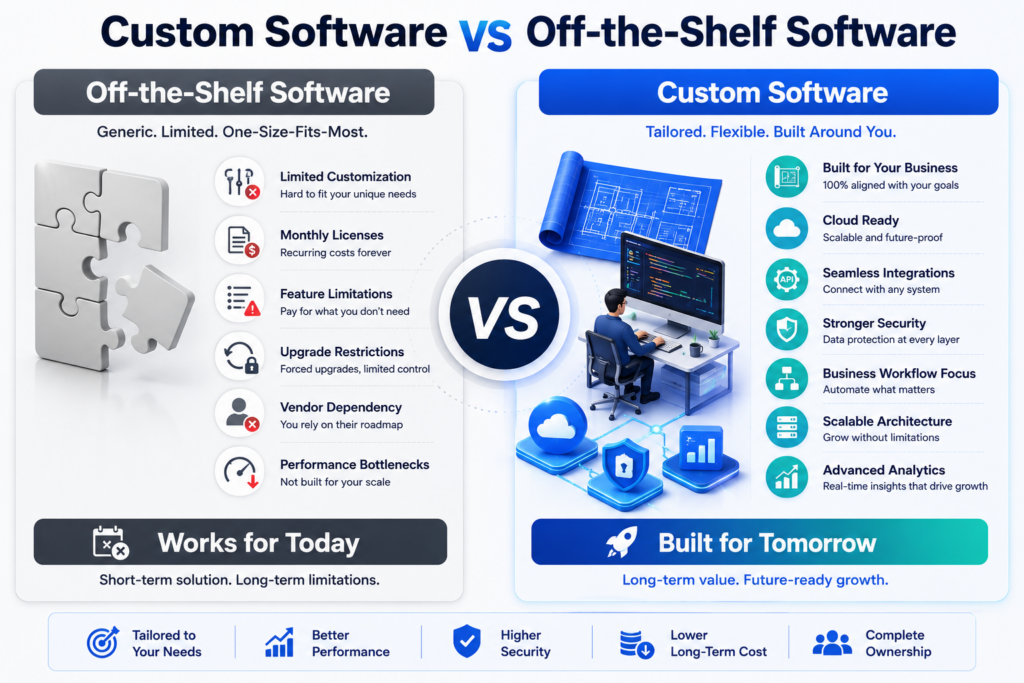
Off-the-Shelf Software
Advantages:
- Lower initial investment
- Faster deployment
- Standard functionality
Limitations:
- Generic features
- Licensing restrictions
- Limited customization
- Difficult scaling
- Vendor dependency
Custom Software
Advantages:
- Built around business workflows
- Easier scalability
- Better integration
- Higher flexibility
- Improved security
- Long-term adaptability
Although custom software requires greater planning, it often becomes more economical as businesses grow.
Independent technology communities, such as this curated software development resource on Stacklist, also emphasize the importance of selecting development approaches that align with long-term business goals rather than short-term convenience: https://stacklist.com/tech-def-169?cardId=7160f668-f971-4d70-ad8c-d25e6f44fb2b
How Modern Technologies Support Business Growth
Today’s software ecosystem provides numerous technologies that improve scalability.
Artificial Intelligence
AI helps businesses:
- Automate repetitive work
- Improve customer support
- Generate insights
- Predict trends
Cloud Computing
Cloud platforms allow companies to expand infrastructure without purchasing additional physical servers.
Microservices
Instead of deploying one massive application, businesses build independent services.
Benefits include:
- Easier updates
- Better reliability
- Independent scaling
- Faster development
Containerization
Technologies like Docker and Kubernetes simplify deployment while supporting scalability across multiple environments.
The Cloud Native Computing Foundation provides valuable learning resources regarding containerized applications.
Best Practices When Building Software That Grows with Your Business
Businesses should plan for future expansion from the beginning.
Consider these best practices:
Understand Future Requirements
Think beyond today’s needs.
Ask questions like:
- Will we expand internationally?
- Will customers increase significantly?
- Will we require mobile applications?
- Will we integrate additional services?
Prioritize Clean Architecture
Well-structured code remains easier to maintain and expand.
Build in Phases
Scalable software doesn’t need every feature immediately.
Start with essential functionality.
Expand as business requirements evolve.
Focus on Security Early
Adding security later becomes expensive.
Integrate security into every development stage.
Monitor Performance
Use analytics and monitoring tools to identify bottlenecks before customers experience problems.
Real-World Example
Imagine a retail business beginning with one physical store.
Initially, it needs:
- Inventory management
- Billing
- Customer database
Within three years, it launches:
- An eCommerce website
- Mobile application
- Loyalty program
- Multiple warehouses
- Franchise locations
If the original software was designed for scalability, these additions become manageable.
If not, the business faces expensive redevelopment, migration, and operational disruption.
Planning for future growth saves both time and money.
Why Choosing the Right Development Partner Matters
Technology alone does not guarantee scalability.
Success depends on thoughtful planning, experienced developers, and a long-term architectural vision.
A capable software development partner evaluates not only current business requirements but also future expansion plans.
Rather than simply delivering an application, they build digital solutions capable of evolving alongside changing business models.
Organizations seeking custom applications, enterprise software, business automation, or scalable web platforms often benefit from working with experienced development teams that understand architecture, integration, security, and long-term maintenance. Learning more about Technobot System’s custom software development services can help businesses understand how scalable, tailor-made solutions support sustainable growth without unnecessary technical limitations.
Conclusion
The question isn’t whether your business will grow—it’s whether your software can grow with it.
Choosing scalable software today prevents expensive migrations, operational disruptions, and performance issues tomorrow. Businesses that prioritize flexible architecture, cloud readiness, security, integrations, and future planning position themselves for long-term success.
Whether you’re launching a startup, expanding into new markets, or modernizing existing operations, investing in software growth with your business should be considered a strategic business decision rather than simply a technical one. By planning for scalability from the start and partnering with experienced custom software professionals, organizations can build digital solutions that remain reliable, secure, and adaptable as their ambitions continue to grow.