Multi-Cloud Strategy: Benefits and Challenges
Modern organizations rely heavily on cloud computing to power applications, data storage, and digital services. However, depending on a single cloud provider can sometimes create limitations in flexibility, pricing, and resilience. Therefore, many organizations are now adopting a multi-cloud strategy to distribute workloads across multiple cloud platforms.
A multi-cloud strategy refers to the use of services from two or more cloud providers, such as AWS, Microsoft Azure, Google Cloud, or private cloud environments. Instead of relying on one vendor, businesses strategically combine multiple platforms to optimize performance, reliability, and cost.
As companies increasingly migrate to the cloud, multi-cloud architecture has become a critical element of modern IT infrastructure planning. According to recent industry reports, more than 80% of enterprises now use multiple cloud platforms to manage applications and data.
In this blog, we will explore the benefits, challenges, architecture, and best practices of multi-cloud strategies, helping businesses understand how to adopt cloud technologies effectively.
What is a Multi-Cloud Strategy?
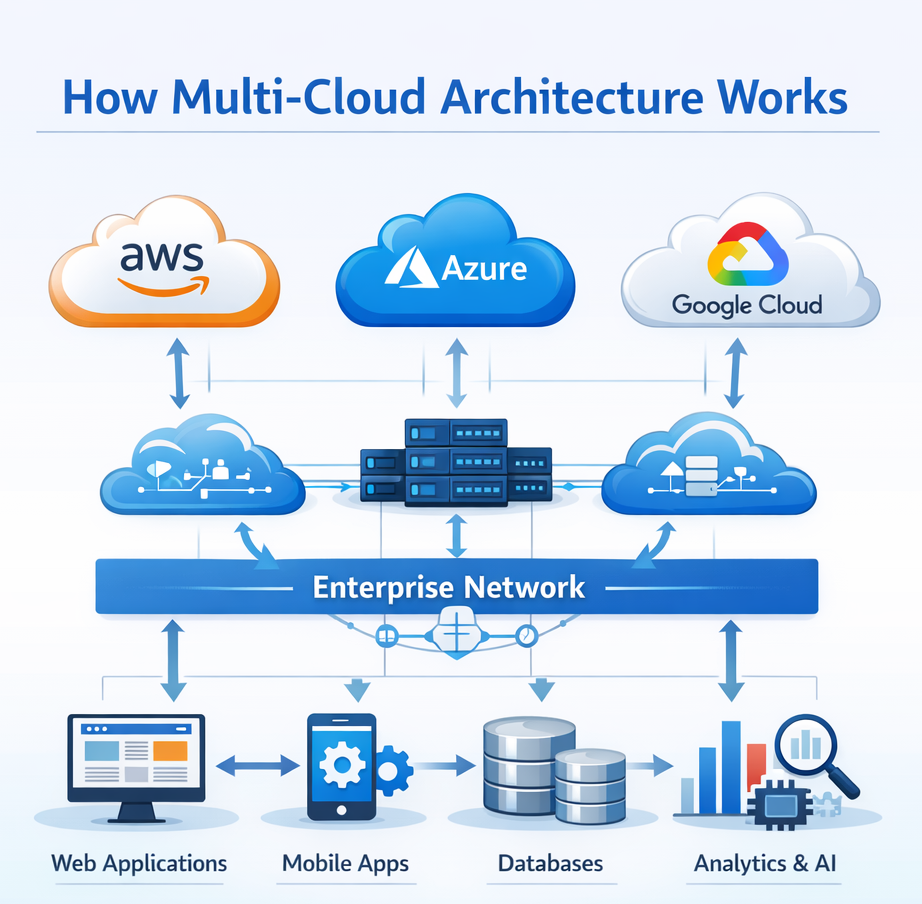
A multi-cloud strategy is an IT approach where an organization uses multiple cloud service providers simultaneously. These providers may include combinations of:
- Public cloud platforms
- Private cloud environments
- Hybrid cloud infrastructure
- Edge computing platforms
Unlike a hybrid cloud, which integrates private and public clouds into one environment, multi-cloud focuses on using several cloud vendors independently or strategically together.
For example:
- A company may host its application backend on AWS
- Use Google Cloud AI services
- Store backups on Microsoft Azure
This approach allows organizations to choose the best service from each provider instead of being locked into one ecosystem.
🌐 Why Businesses Are Adopting Multi-Cloud
Organizations are increasingly adopting multi-cloud strategies because cloud technology has become the backbone of digital transformation. However, relying on one cloud vendor can create limitations.
Therefore, companies use multiple providers to gain:
- Greater flexibility
- Higher reliability
- Stronger disaster recovery capabilities
- Improved performance optimization
For example, businesses implementing modern IT infrastructure strategies often combine cloud platforms to improve scalability and performance. You can explore more insights about cloud infrastructure and enterprise technologies on the Technobot System technology blog:
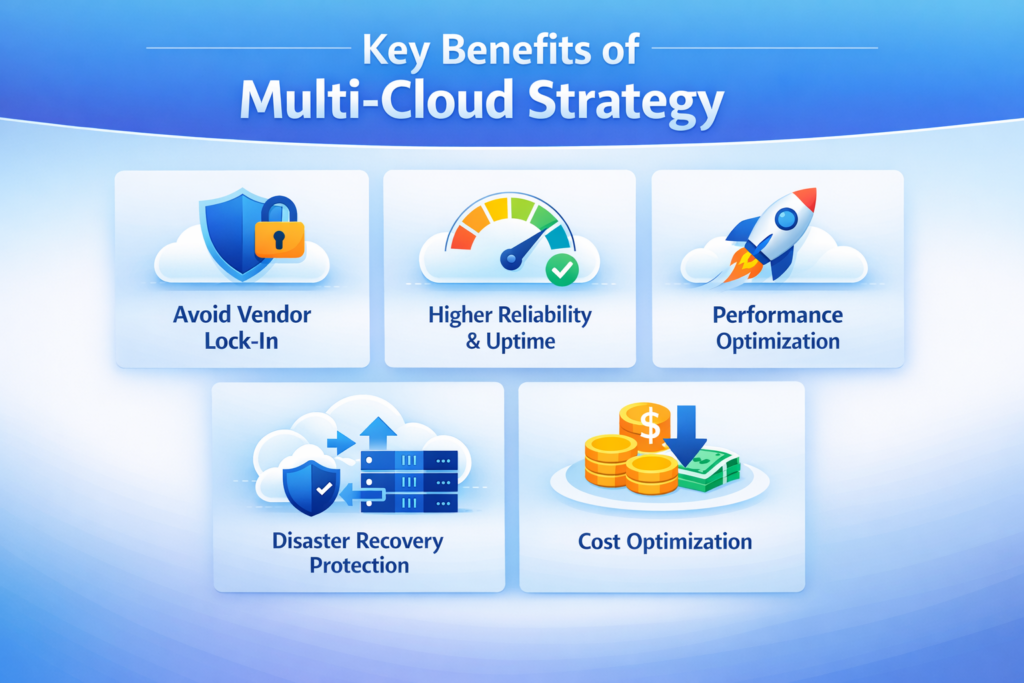
Key Benefits of a Multi-Cloud Strategy
1️⃣ Avoiding Vendor Lock-In
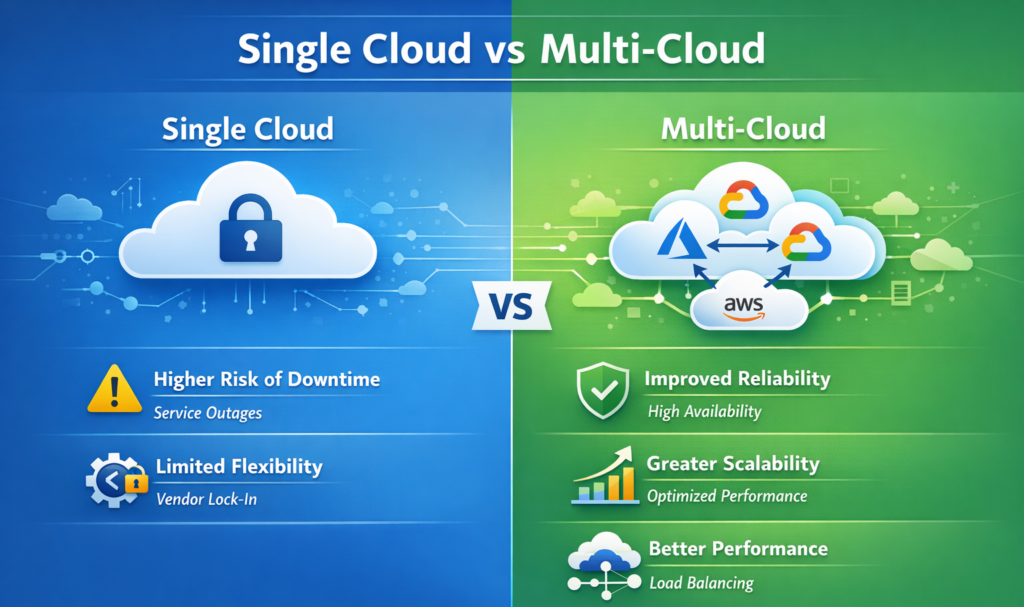
One of the biggest advantages of a multi-cloud strategy is avoiding vendor lock-in.
When companies depend on a single cloud provider, they become restricted by:
- Pricing changes
- Platform limitations
- Service disruptions
However, with multi-cloud architecture, organizations can easily switch workloads between providers, ensuring long-term flexibility.
For example, if one provider increases pricing, businesses can move certain workloads to another platform.
2️⃣ Improved Reliability and Uptime
Cloud outages occasionally affect even the largest providers. However, multi-cloud environments reduce this risk significantly.
If one provider experiences downtime, workloads can automatically shift to another provider.
This approach ensures:
- Continuous service availability
- Business continuity
- Improved system resilience
Consequently, multi-cloud strategies are widely used in mission-critical systems such as financial platforms, e-commerce applications, and global SaaS products.
3️⃣ Performance Optimization
Different cloud providers offer strengths in specific services.
For example:
- AWS excels in infrastructure scalability
- Google Cloud leads in AI and machine learning
- Azure integrates seamlessly with enterprise Microsoft environments
By using multiple platforms, businesses can choose the best-performing services for each workload.
As a result, applications perform better and deliver faster user experiences.
4️⃣ Stronger Disaster Recovery
Another major benefit of multi-cloud architecture is advanced disaster recovery planning.
Organizations can distribute backups across multiple providers, ensuring data safety.
Benefits include:
- Geographic redundancy
- Cross-platform backup storage
- Rapid recovery during outages
For example, companies implementing modern DevOps and cloud automation pipelines often combine multi-cloud environments with disaster recovery frameworks.
Learn more about DevOps and CI/CD automation practices here:
5️⃣ Cost Optimization
Cloud providers have different pricing structures for services like:
- Data storage
- Computing power
- Data transfer
A multi-cloud strategy allows organizations to optimize costs by choosing the most cost-effective platform for each workload.
For instance:
- Storage may be cheaper on one platform
- AI processing may be cheaper on another
Therefore, businesses can reduce operational expenses while improving performance.
⚠️ Challenges of Multi-Cloud Strategy
Despite its advantages, multi-cloud adoption also introduces several complexities.
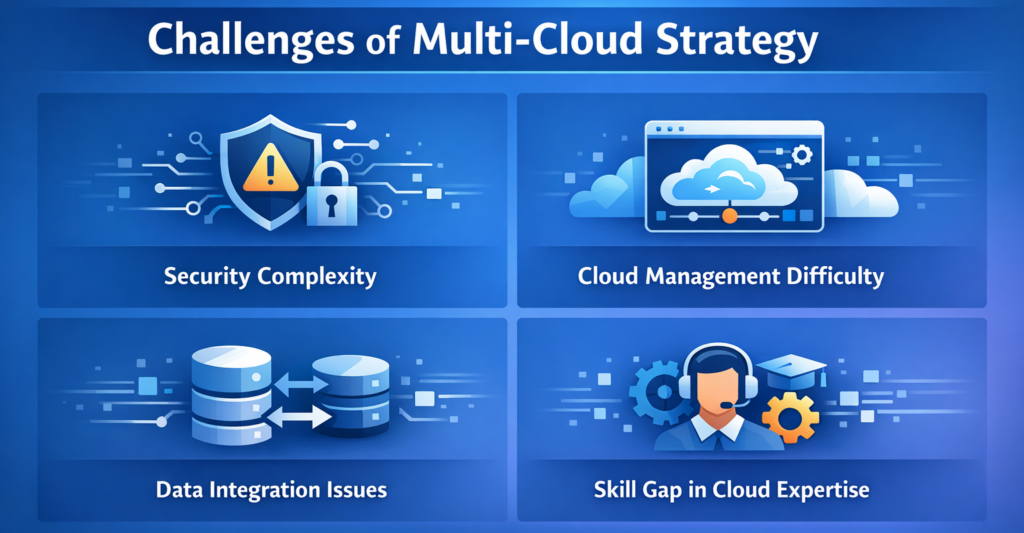
Organizations must carefully manage these challenges to ensure success.
1️⃣ Increased Management Complexity
Managing multiple cloud platforms can significantly increase operational complexity.
Teams must monitor:
- Multiple dashboards
- Different APIs
- Separate billing systems
- Various security models
Therefore, organizations often use Cloud Management Platforms (CMPs) to centralize control.
2️⃣ Security Risks
Security management becomes more complex in multi-cloud environments.
Each provider has different:
- Security protocols
- Identity access management policies
- Compliance frameworks
Consequently, inconsistent configurations can create vulnerabilities.
Organizations must implement centralized cloud security policies to maintain protection across platforms.
For global cybersecurity insights, you can explore resources such as
3️⃣ Data Integration Challenges
Applications running across multiple cloud environments may struggle with:
- Data synchronization
- Latency issues
- API compatibility
For example, transferring large datasets between cloud providers can increase costs and latency.
Therefore, companies must design efficient data architecture strategies when implementing multi-cloud systems.
4️⃣ Skill Gap in Cloud Management
Multi-cloud environments require skilled professionals who understand:
- AWS architecture
- Azure infrastructure
- Google Cloud services
- Cloud security models
However, hiring or training professionals with multi-cloud expertise can be challenging.
Organizations must invest in cloud training programs and DevOps teams to manage these environments effectively.
Multi-Cloud Architecture Components
A successful multi-cloud strategy relies on several critical architectural components.
Cloud Service Providers
These platforms provide computing infrastructure and services.
Examples:
- Amazon Web Services
- Microsoft Azure
- Google Cloud Platform
Cloud Management Platforms (CMP)
These platforms help manage multiple clouds from a single control interface.
Examples include:
- VMware vRealize
- Morpheus
- CloudBolt
Containerization and Kubernetes
Containers allow applications to run consistently across different environments.
Tools include:
- Docker
- Kubernetes
These technologies simplify application deployment across multiple cloud platforms.
Monitoring and Observability Tools
Monitoring tools help track system performance across cloud environments.
Examples:
- Datadog
- Prometheus
- New Relic
These tools ensure smooth system operation and quick issue detection.
Best Practices for Implementing a Multi-Cloud Strategy
Standardize Infrastructure
Using infrastructure-as-code tools such as Terraform ensures consistent deployment across cloud platforms.
Implement Centralized Security Policies
Security policies should remain consistent across all cloud providers.
This includes:
- Identity access management
- Encryption standards
- compliance monitoring
Use Containerized Applications
Containers allow applications to run seamlessly across cloud providers without compatibility issues.
Monitor Cloud Costs
Organizations should continuously monitor resource usage to avoid unnecessary expenses.
Cost monitoring tools help track spending across multiple cloud environments.
Future of Multi-Cloud Strategy
The future of multi-cloud computing looks extremely promising.
As organizations adopt AI, edge computing, and distributed cloud systems, multi-cloud strategies will become even more essential.
Emerging trends include:
- AI-driven cloud optimization
- Edge computing integration
- Distributed cloud networks
- Serverless multi-cloud architectures
Consequently, companies that adopt multi-cloud strategies today will gain a significant competitive advantage in digital transformation.
Conclusion
A multi-cloud strategy enables organizations to improve reliability, optimize performance, and reduce dependence on a single cloud provider. By combining services from multiple platforms, businesses gain greater flexibility and resilience.
However, implementing a multi-cloud architecture requires careful planning, strong security practices, and advanced management tools.
When executed correctly, multi-cloud strategies can significantly enhance scalability, innovation, and long-term business growth.
As cloud technology continues evolving, organizations that embrace multi-cloud approaches will be better positioned to adapt to future technological demands and digital transformation initiatives.