In today’s fast-evolving digital landscape, cloud computing has become the backbone of modern businesses. However, while cloud platforms offer flexibility, scalability, and innovation, they can also lead to unexpected expenses if not managed properly. This is where cloud cost optimization becomes essential.
Organizations are increasingly seeking ways to reduce infrastructure costs without compromising performance or scalability. Whether you’re running custom applications, managing enterprise workloads, or scaling digital products, optimizing cloud spending is no longer optional—it’s a strategic necessity. Many businesses working with experienced IT service providers such as Technobot System have already started implementing structured cost optimization strategies to maximize ROI from their cloud investments.
This blog explores practical, actionable, and industry-proven strategies to help you master cloud cost optimization and save significantly on infrastructure.
What is Cloud Cost Optimization?
Cloud cost optimization refers to the process of reducing overall cloud spending while maintaining or improving performance, efficiency, and scalability. It involves analyzing resource usage, eliminating waste, and implementing smarter provisioning strategies.
Instead of simply cutting costs, optimization focuses on spending smarter.
Key Objectives of Cloud Cost Optimization:
- Eliminate unused or underutilized resources
- Improve workload efficiency
- Align spending with business needs
- Enable better forecasting and budgeting
- Maintain performance while reducing expenses
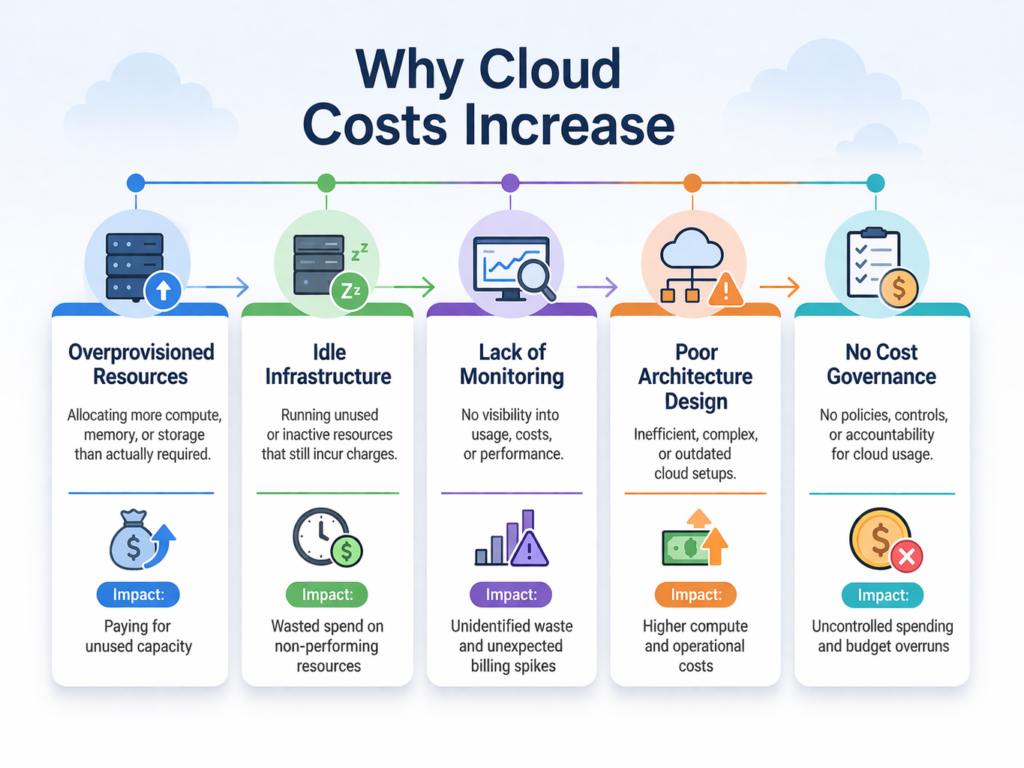
Why Cloud Costs Get Out of Control
Despite the benefits of cloud computing, many organizations face rising costs due to poor management practices.
Common Reasons for High Cloud Costs:
1. Overprovisioning Resources
Many teams allocate more resources than necessary to avoid performance issues, which leads to wasted capacity.
2. Lack of Visibility
Without proper monitoring tools, it becomes difficult to track where the money is being spent.
3. Idle or Unused Resources
Inactive virtual machines, storage, and databases often continue to incur charges.
4. Poor Architecture Decisions
Inefficient system design can increase compute and storage costs unnecessarily.
5. Absence of Governance
Without policies or cost controls, teams may deploy resources without accountability.
According to the AWS Cost Optimization Guide, a significant percentage of cloud spending is often wasted due to inefficient resource usage.
Key Benefits of Cloud Cost Optimization
Implementing effective cloud cost optimization strategies can deliver both financial and operational advantages.
Financial Benefits:
- Reduced infrastructure expenses
- Improved budget control
- Better ROI on cloud investments
Operational Benefits:
- Increased system efficiency
- Enhanced performance monitoring
- Improved scalability planning
Strategic Benefits:
- Faster innovation cycles
- Better decision-making with data insights
- Alignment between IT and business goals
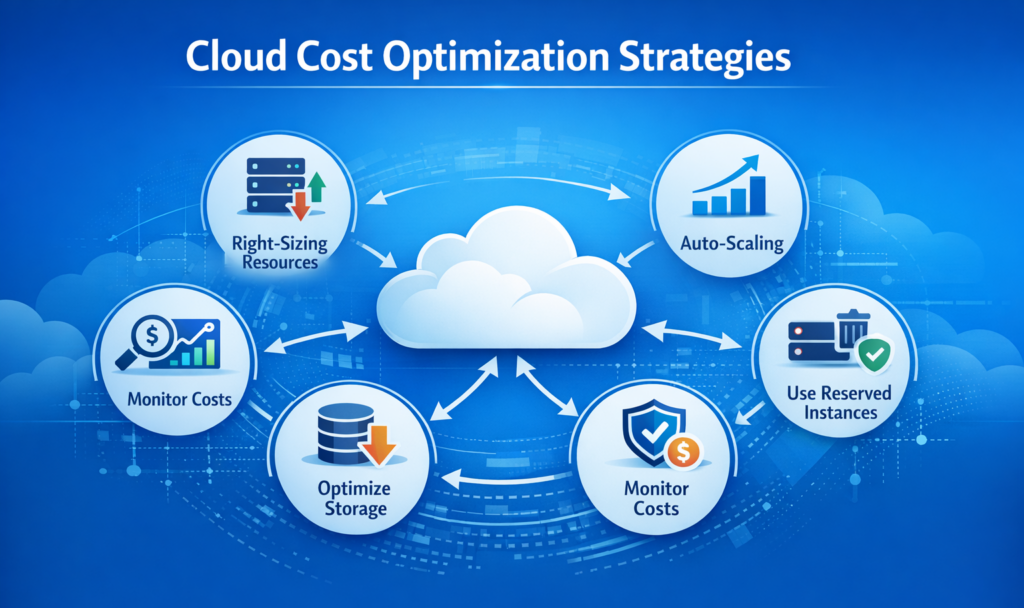
Proven Strategies for Cloud Cost Optimization
Let’s explore practical strategies that businesses can implement immediately.
1. Right-Sizing Resources
Right-sizing is one of the most effective ways to optimize cloud costs.
What is Right-Sizing?
It involves matching resource allocation (CPU, memory, storage) with actual usage requirements.
Best Practices:
- Monitor usage patterns regularly
- Downgrade oversized instances
- Upgrade only when necessary
Example:
If a server consistently uses only 30% of its allocated CPU, it should be resized to a smaller instance.
2. Use Auto-Scaling Effectively
Auto-scaling allows systems to adjust resources dynamically based on demand.
Benefits:
- Prevents overprovisioning
- Ensures optimal performance during peak loads
- Reduces costs during low usage periods
Tip:
Set proper thresholds to avoid unnecessary scaling events.
3. Eliminate Idle Resources
Unused resources are one of the biggest contributors to cloud waste.
Identify:
- Idle virtual machines
- Unused storage volumes
- Orphaned IP addresses
Action Steps:
- Schedule automatic shutdowns
- Use monitoring tools to detect inactivity
- Regularly audit cloud assets
4. Adopt Reserved and Spot Instances
Cloud providers offer discounted pricing models for predictable workloads.
Types:
- Reserved Instances – Lower cost for long-term commitments
- Spot Instances – Extremely cost-effective for non-critical workloads
When to Use:
- Stable applications → Reserved Instances
- Batch processing → Spot Instances
5. Optimize Storage Costs
Storage costs can quickly accumulate if not managed properly.
Optimization Techniques:
- Use lifecycle policies
- Move infrequently accessed data to cold storage
- Delete redundant backups
Example:
Archiving old logs instead of storing them in high-cost storage tiers.
6. Implement Cost Monitoring and Alerts
Visibility is critical for cloud cost optimization.
Tools to Use:
- AWS Cost Explorer
- Azure Cost Management
- Google Cloud Billing
You can also explore tools discussed in related resources like cloud monitoring strategies to improve visibility.
Best Practices:
- Set budget alerts
- Monitor daily usage
- Analyze cost trends
7. Improve Architecture Design
Efficient architecture plays a major role in reducing cloud expenses.
Consider:
- Serverless architecture
- Microservices design
- Containerization
According to the Google Cloud Architecture Framework, well-designed systems can significantly reduce operational costs.
Benefits:
- Reduced resource consumption
- Better scalability
- Improved performance
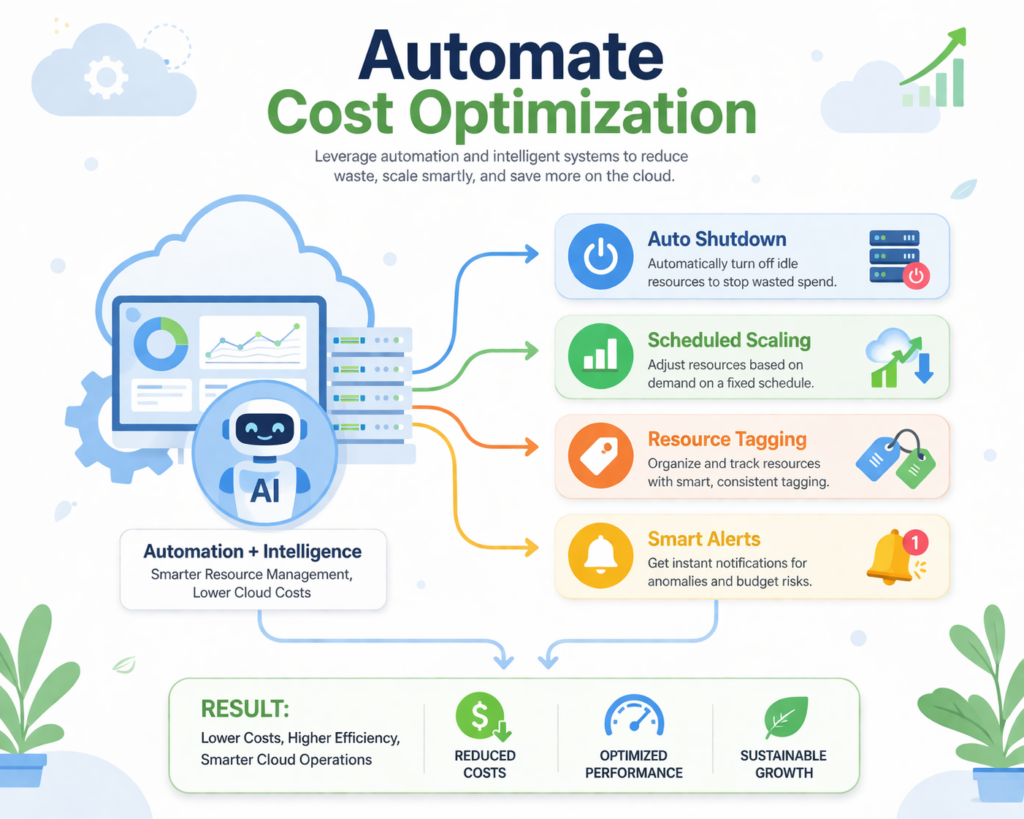
8. Use Automation for Cost Control
Automation helps enforce cost-saving practices consistently.
Examples:
- Auto shutdown scripts
- Scheduled scaling
- Resource tagging automation
Automation reduces human error and ensures continuous optimization.
9. Tagging and Resource Organization
Tagging allows better tracking and accountability.
Benefits:
- Identify cost by department or project
- Improve budgeting
- Enhance reporting
Example Tags:
- Project name
- Environment (Dev, Test, Production)
- Owner
10. Regular Cost Audits
Cloud environments are dynamic, so regular audits are essential.
Audit Checklist:
- Identify unused resources
- Review billing reports
- Analyze performance vs cost
Businesses that invest in structured audits often achieve long-term savings and operational efficiency. Working with expert teams through custom cloud solutions can further streamline this process.
Real-World Example of Cloud Cost Optimization
Consider a mid-sized SaaS company that experienced rising cloud costs due to rapid scaling.
Challenges:
- Overprovisioned instances
- Unused storage
- Lack of monitoring
Solutions Implemented:
- Right-sizing resources
- Implementing auto-scaling
- Removing idle assets
- Setting cost alerts
Results:
- 35% reduction in monthly cloud expenses
- Improved performance
- Better cost visibility
This example demonstrates that cloud cost optimization is not just theoretical—it delivers measurable results.
Common Mistakes to Avoid
While optimizing cloud costs, avoid these common pitfalls:
- Ignoring cost visibility
- Focusing only on cost reduction instead of efficiency
- Not involving engineering teams
- Skipping regular audits
- Overusing reserved instances without planning
Future Trends in Cloud Cost Optimization
As cloud technology evolves, cost optimization strategies are also becoming more advanced.
Emerging Trends:
- AI-driven cost optimization
- FinOps practices
- Multi-cloud cost management
- Predictive analytics for budgeting
Organizations adopting these trends will gain a competitive advantage.
Conclusion
Cloud computing offers immense potential, but without proper management, it can lead to unnecessary expenses. Cloud cost optimization is essential for businesses aiming to balance performance and cost efficiency.
By implementing strategies such as right-sizing, automation, monitoring, and architectural improvements, organizations can significantly reduce infrastructure costs while maintaining scalability and performance.
Moreover, partnering with experienced IT solution providers like Technobot System can help businesses design cost-efficient cloud environments tailored to their specific needs.
Ultimately, cloud cost optimization is not a one-time task—it’s an ongoing process that requires continuous monitoring, analysis, and improvement.