In today’s fast-paced digital ecosystem, businesses are under constant pressure to deliver high-quality products quickly and efficiently. Whether it’s launching a new application, updating a website, or scaling a digital platform, speed and reliability are no longer optional—they are critical. This is where the role of DevOps in faster product delivery becomes not just relevant, but essential.
Modern IT service providers offering custom applications, web development, and scalable solutions are increasingly relying on DevOps practices to streamline workflows and accelerate release cycles. Platforms like custom software development services demonstrate how integrating development and operations can transform traditional delivery models into agile, high-performing systems.
Let’s explore how DevOps is revolutionizing product delivery and why it has become a cornerstone of modern software development.
Understanding the Role of DevOps in Faster Product Delivery
DevOps is a combination of cultural philosophies, practices, and tools that enhances an organization’s ability to deliver applications and services at high velocity. It bridges the gap between development (Dev) and operations (Ops), ensuring seamless collaboration.
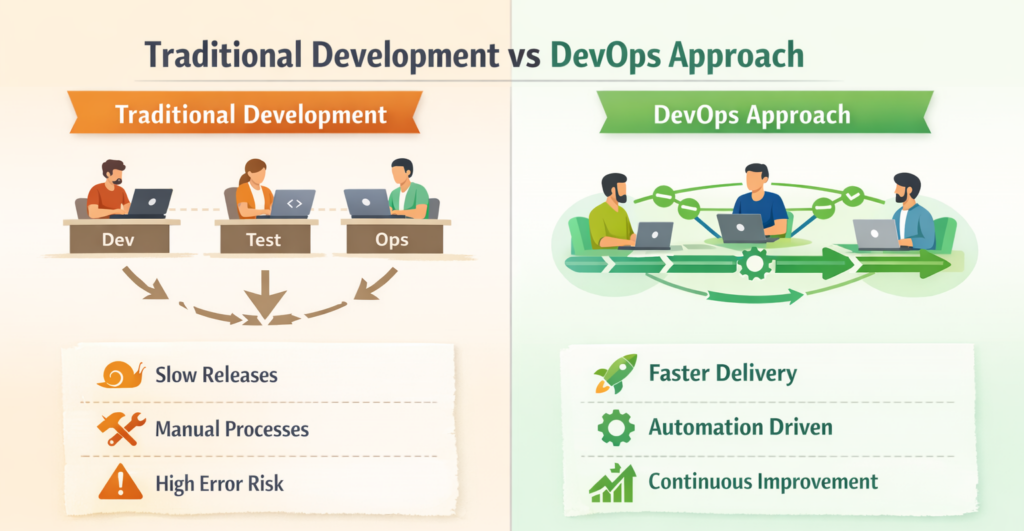
What Makes DevOps Different?
Traditional development models often suffer from:
- Siloed teams
- Delayed feedback loops
- Manual deployment processes
- High chances of errors
DevOps, on the other hand, introduces:
- Continuous Integration (CI)
- Continuous Delivery (CD)
- Automation pipelines
- Real-time monitoring and feedback
As a result, organizations can release software faster, more reliably, and with fewer issues.
Why Faster Product Delivery Matters in Today’s Market
Speed is a competitive advantage. Companies that deliver faster can:
- Respond quickly to market demands
- Improve customer satisfaction
- Reduce time-to-market
- Gain a competitive edge
For example, businesses leveraging DevOps can deploy updates multiple times a day instead of once every few weeks. According to insights from AWS DevOps practices, organizations using DevOps achieve significantly shorter development cycles and improved deployment frequency.
Key Components of DevOps That Accelerate Delivery
1. Continuous Integration (CI)
CI ensures that code changes are automatically tested and merged into a shared repository.
Benefits:
- Early detection of bugs
- Reduced integration issues
- Faster development cycles
2. Continuous Delivery (CD)
CD automates the release process, ensuring that code is always in a deployable state.
Benefits:
- Faster release cycles
- Reduced manual intervention
- Improved reliability
3. Infrastructure as Code (IaC)
IaC allows developers to manage infrastructure using code instead of manual processes.
Benefits:
- Consistency across environments
- Faster provisioning
- Reduced configuration errors
4. Monitoring and Feedback
Real-time monitoring helps teams identify issues quickly and improve performance.
Benefits:
- Faster issue resolution
- Improved user experience
- Data-driven decision making
How DevOps Improves Collaboration Across Teams
One of the most important aspects of the role of DevOps in faster product delivery is improved collaboration.
Breaking Down Silos
DevOps encourages cross-functional teams where developers, testers, and operations work together. This leads to:
- Faster communication
- Better problem-solving
- Shared responsibility
Example Scenario
Instead of waiting for operations teams to deploy code, developers can push updates through automated pipelines. This reduces delays and increases efficiency.
For deeper insights into collaboration and development workflows, you can explore resources like modern development practices blog, which highlights evolving trends in software delivery.
Automation: The Backbone of DevOps
Automation plays a critical role in accelerating product delivery.
What Can Be Automated?
- Code testing
- Deployment processes
- Infrastructure setup
- Security checks
Impact of Automation
- Reduces human errors
- Saves time
- Ensures consistency
According to IBM DevOps insights, automation is one of the primary drivers behind faster and more reliable software delivery.
DevOps Tools That Enhance Speed and Efficiency
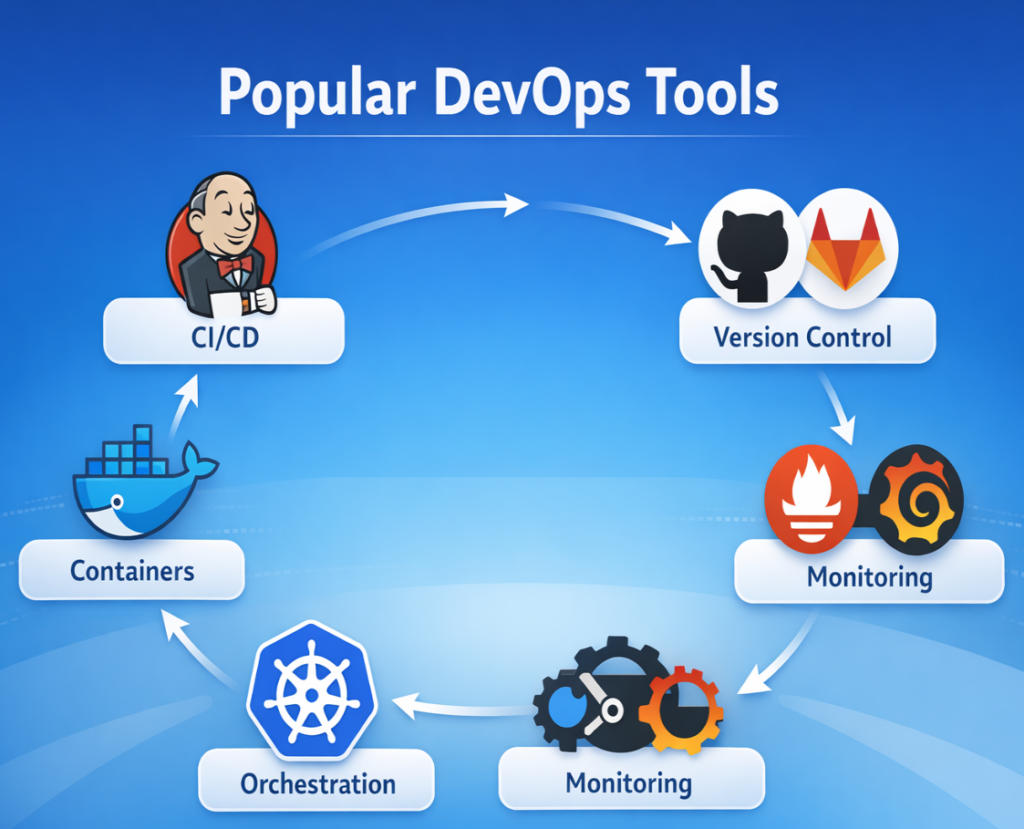
A wide range of tools support DevOps practices. Some of the most popular include:
CI/CD Tools
- Jenkins
- GitHub Actions
- GitLab CI/CD
Containerization Tools
- Docker
- Kubernetes
Monitoring Tools
- Prometheus
- Grafana
These tools help teams build, test, and deploy applications quickly and efficiently.
Real-World Benefits of DevOps in Product Delivery
1. Faster Time-to-Market
DevOps enables rapid releases, helping businesses launch products faster.
2. Improved Quality
Continuous testing ensures fewer bugs and higher-quality software.
3. Scalability
DevOps practices make it easier to scale applications as demand grows.
4. Better Customer Experience
Frequent updates and faster fixes lead to improved user satisfaction.
Challenges in Implementing DevOps
While DevOps offers numerous benefits, implementation can be challenging.
Common Challenges
- Resistance to change
- Lack of skilled professionals
- Tool integration complexities
- Cultural transformation
How to Overcome Them
- Invest in training
- Start with small projects
- Use the right tools
- Encourage collaboration
Organizations that provide tailored IT solutions often help businesses adopt DevOps practices effectively, ensuring a smooth transition and measurable results.
Best Practices for Leveraging DevOps
To maximize the benefits of DevOps, consider the following best practices:
1. Adopt a DevOps Culture
Encourage collaboration, transparency, and shared responsibility.
2. Focus on Automation
Automate repetitive tasks to save time and reduce errors.
3. Use Microservices Architecture
Break applications into smaller, manageable services for faster deployment.
4. Implement Continuous Monitoring
Track performance and resolve issues proactively.
5. Prioritize Security (DevSecOps)
Integrate security into every stage of the development lifecycle.
The Future of DevOps in Product Development
The role of DevOps continues to evolve with advancements in:
- Artificial Intelligence (AI)
- Machine Learning (ML)
- Cloud computing
- Serverless architecture
These technologies are making DevOps even more powerful and efficient.
Businesses adopting these trends are better positioned to innovate and stay competitive in the long run.
Conclusion: Why DevOps is Essential for Faster Product Delivery
In conclusion, the role of DevOps in faster product delivery is transformative. It enables organizations to deliver high-quality products quickly, efficiently, and reliably.
By integrating development and operations, automating workflows, and fostering collaboration, DevOps eliminates traditional bottlenecks and accelerates innovation.
For businesses looking to build scalable applications, improve delivery speed, and enhance user experience, adopting DevOps is no longer optional—it is a necessity. Partnering with experienced IT service providers that specialize in custom development and modern deployment practices, such as those highlighted on professional IT solutions platforms, can further streamline this journey and ensure long-term success.