In modern software development, speed and reliability are no longer optional—they are essential. Businesses today expect faster releases, fewer bugs, and seamless user experiences. This is where Continuous Integration vs Continuous Deployment (CI/CD) becomes a critical concept for developers, teams, and organizations.
Whether you’re building scalable web applications, enterprise systems, or custom digital solutions, adopting CI/CD practices can dramatically improve efficiency and product quality. In fact, many modern development teams rely on structured workflows and automation strategies—like those implemented in custom software development solutions—to stay competitive in fast-moving markets.
In this blog, we will break down the meaning of CI/CD, explore the differences between Continuous Integration and Continuous Deployment, and provide practical insights into how these practices transform modern development workflows.
What is CI/CD?
CI/CD stands for Continuous Integration and Continuous Deployment (or Delivery). It is a set of practices designed to automate and streamline the software development lifecycle.
At its core, CI/CD focuses on:
- Automating code integration
- Testing code continuously
- Delivering updates quickly and reliably
- Reducing manual intervention
Why CI/CD Matters
Without CI/CD, development teams often face:
- Delayed releases
- Integration conflicts
- Higher risk of bugs
- Manual deployment errors
However, with CI/CD, teams can:
- Release features faster
- Detect bugs early
- Improve collaboration
- Maintain code quality
As a result, CI/CD has become a foundational pillar of DevOps practices, widely adopted across industries.
Understanding Continuous Integration (CI)
What is Continuous Integration?
Continuous Integration (CI) is the practice of frequently integrating code changes into a shared repository. Each change is automatically tested and validated.
Instead of merging code after long development cycles, developers push small updates regularly. This approach reduces conflicts and improves code stability.
How Continuous Integration Works
A typical CI workflow includes:
- Developers write code
- Code is pushed to a repository (e.g., Git)
- Automated build process starts
- Automated tests run
- Feedback is generated instantly
Key Benefits of Continuous Integration
- Early bug detection
- Improved code quality
- Faster development cycles
- Better team collaboration
Example
Imagine a team working on a web application. Without CI, developers may merge code after weeks, causing major conflicts. However, with CI, code is merged daily, tested automatically, and validated continuously.
For deeper technical understanding of CI pipelines, you can explore this guide by AWS CI/CD Overview, which explains how automation enhances development workflows.
Understanding Continuous Deployment (CD)
What is Continuous Deployment?
Continuous Deployment (CD) is the next step after Continuous Integration. It ensures that every validated change is automatically deployed to production.
In simple terms:
If the code passes all tests, it goes live—without manual approval.
Continuous Delivery vs Continuous Deployment
Many people confuse these two concepts. Let’s clarify:
- Continuous Delivery: Code is ready for deployment but requires manual approval
- Continuous Deployment: Code is automatically deployed without human intervention
How Continuous Deployment Works
- Code passes CI pipeline
- Automated testing is completed
- Code is pushed to production environment
- Users receive updates instantly
Benefits of Continuous Deployment
- Faster time to market
- Reduced manual work
- Continuous feedback from users
- Higher release frequency
However, Continuous Deployment requires strong testing and monitoring systems. Without them, risks can increase.
Continuous Integration vs Continuous Deployment (CI/CD)
Key Differences Explained
Understanding Continuous Integration vs Continuous Deployment (CI/CD) is crucial for implementing the right strategy.
| Feature | Continuous Integration | Continuous Deployment |
|---|---|---|
| Purpose | Integrate code frequently | Deploy code automatically |
| Focus | Code quality & testing | Release automation |
| Frequency | Multiple times daily | After every successful build |
| Risk Level | Low | Medium to High (if testing is weak) |
| Manual Intervention | Required in deployment | Fully automated |
Simplified Explanation
- CI ensures your code works correctly
- CD ensures your code reaches users quickly
Together, they form a complete automation pipeline.
CI/CD Pipeline Explained
A CI/CD pipeline is a series of automated steps that move code from development to production.
Typical Pipeline Stages
1. Source Stage
Code is written and committed to a repository.
2. Build Stage
The application is compiled and dependencies are installed.
3. Test Stage
Automated tests are executed:
- Unit tests
- Integration tests
- UI tests
4. Deployment Stage
Code is deployed to staging or production.
Tools Used in CI/CD
Popular tools include:
- Jenkins
- GitHub Actions
- GitLab CI/CD
- Docker
- Kubernetes
These tools help automate workflows and reduce manual errors.
If you’re exploring modern development architectures, you may also find insights in related topics like scalable backend systems or automation strategies discussed in latest development blogs.
Real-World Use Cases of CI/CD
1. Web Application Development
CI/CD helps teams push updates without downtime. For example:
- Bug fixes are deployed instantly
- New features are released incrementally
2. Mobile App Development
Developers can:
- Test builds automatically
- Release updates faster
- Reduce app crashes
3. SaaS Platforms
CI/CD enables:
- Continuous feature rollouts
- A/B testing
- Faster user feedback
Challenges in Implementing CI/CD
While CI/CD offers many benefits, it is not without challenges.
Common Issues
- Poor test coverage
- Misconfigured pipelines
- Security risks
- Lack of monitoring
How to Overcome These Challenges
- Invest in automated testing
- Use version control effectively
- Implement strong security practices
- Monitor performance continuously
According to Martin Fowler’s guide on Continuous Integration, maintaining small and frequent updates is key to successful implementation.
Best Practices for CI/CD Implementation
To fully leverage CI/CD, consider the following best practices:
1. Automate Everything
From testing to deployment, automation reduces human errors.
2. Maintain Small Code Changes
Frequent, smaller updates are easier to manage and debug.
3. Ensure Strong Test Coverage
Your pipeline is only as strong as your tests.
4. Use Version Control Properly
Maintain clean and structured repositories.
5. Monitor and Optimize Continuously
Track performance and improve pipelines over time.
CI/CD and DevOps: A Strong Connection
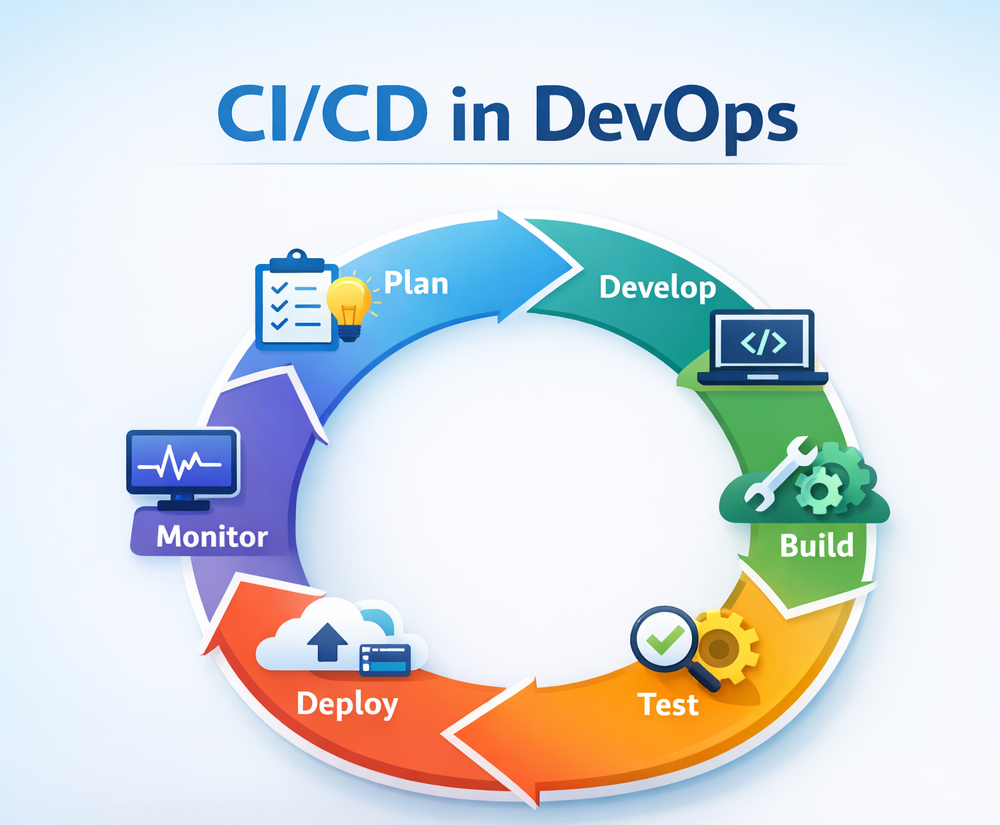
CI/CD is a core component of DevOps culture. It bridges the gap between development and operations.
How CI/CD Supports DevOps
- Faster delivery cycles
- Improved collaboration
- Reduced deployment failures
- Continuous feedback loops
Organizations that adopt CI/CD often experience higher productivity and better software quality.
When Should You Use CI/CD?
CI/CD is ideal when:
- You release updates frequently
- You manage large codebases
- You work in agile teams
- You need faster deployment cycles
However, smaller projects may not require full automation. In such cases, a simplified CI pipeline may be sufficient.
Future of CI/CD in Software Development
The future of Continuous Integration vs Continuous Deployment (CI/CD) is evolving with:
- AI-driven testing
- Predictive deployment strategies
- Advanced automation tools
- Serverless architectures
As technology advances, CI/CD pipelines will become even more intelligent and efficient.
Conclusion
Understanding Continuous Integration vs Continuous Deployment (CI/CD) is essential for modern software development. While Continuous Integration focuses on maintaining code quality through frequent testing, Continuous Deployment ensures that updates reach users quickly and efficiently.
When implemented correctly, CI/CD:
- Accelerates development
- Improves product quality
- Enhances team collaboration
- Reduces deployment risks
In today’s competitive digital landscape, adopting CI/CD is not just a technical upgrade—it is a strategic advantage. Organizations that invest in automation, testing, and scalable development practices are better positioned to deliver high-quality solutions consistently.
For businesses looking to streamline their development workflows and build reliable digital products, partnering with experienced teams offering custom software development services can further enhance CI/CD implementation and long-term success.